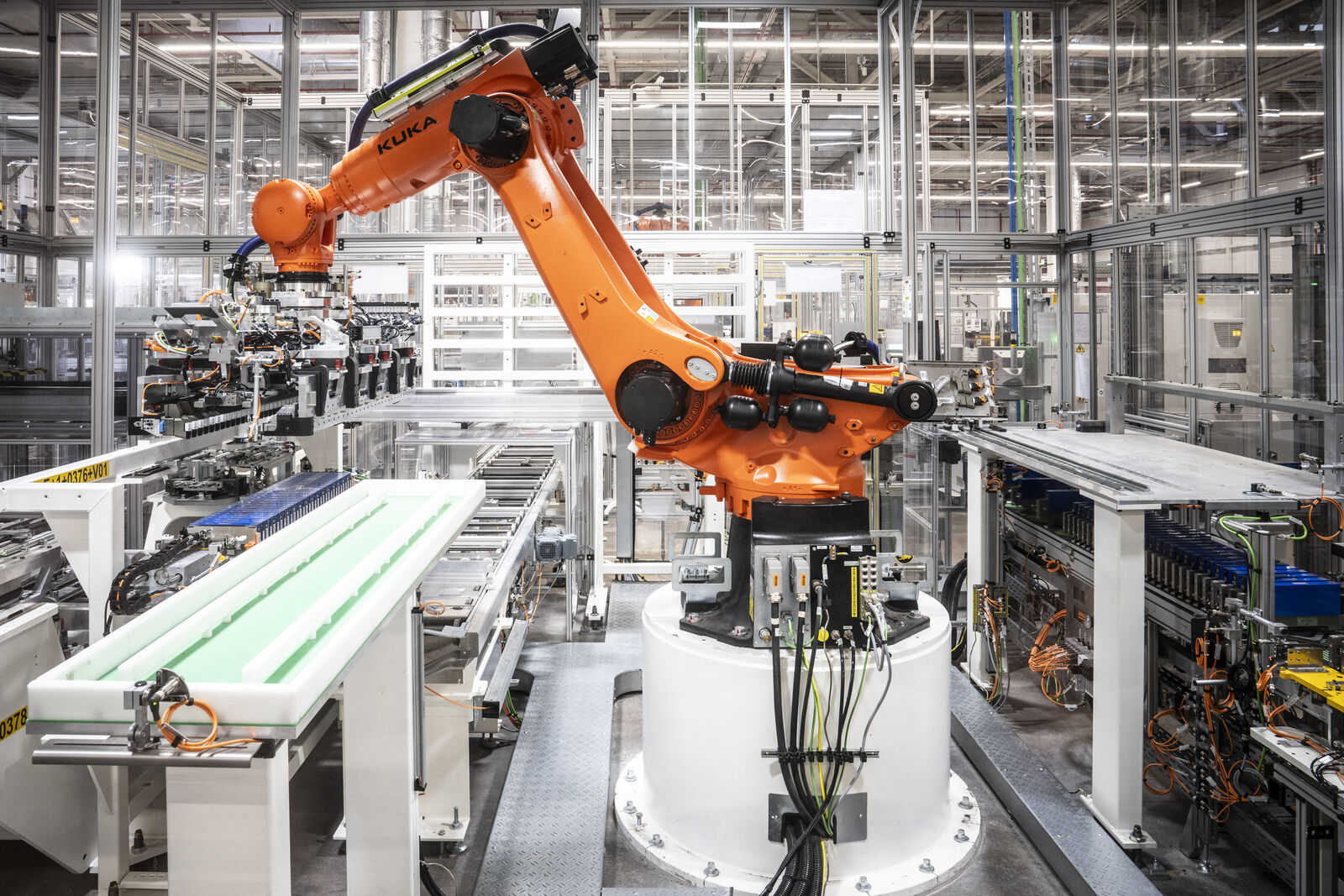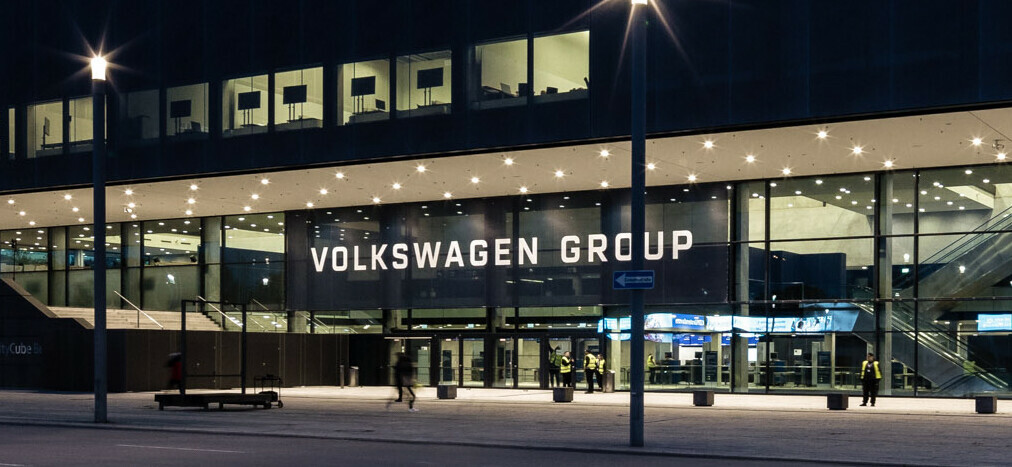

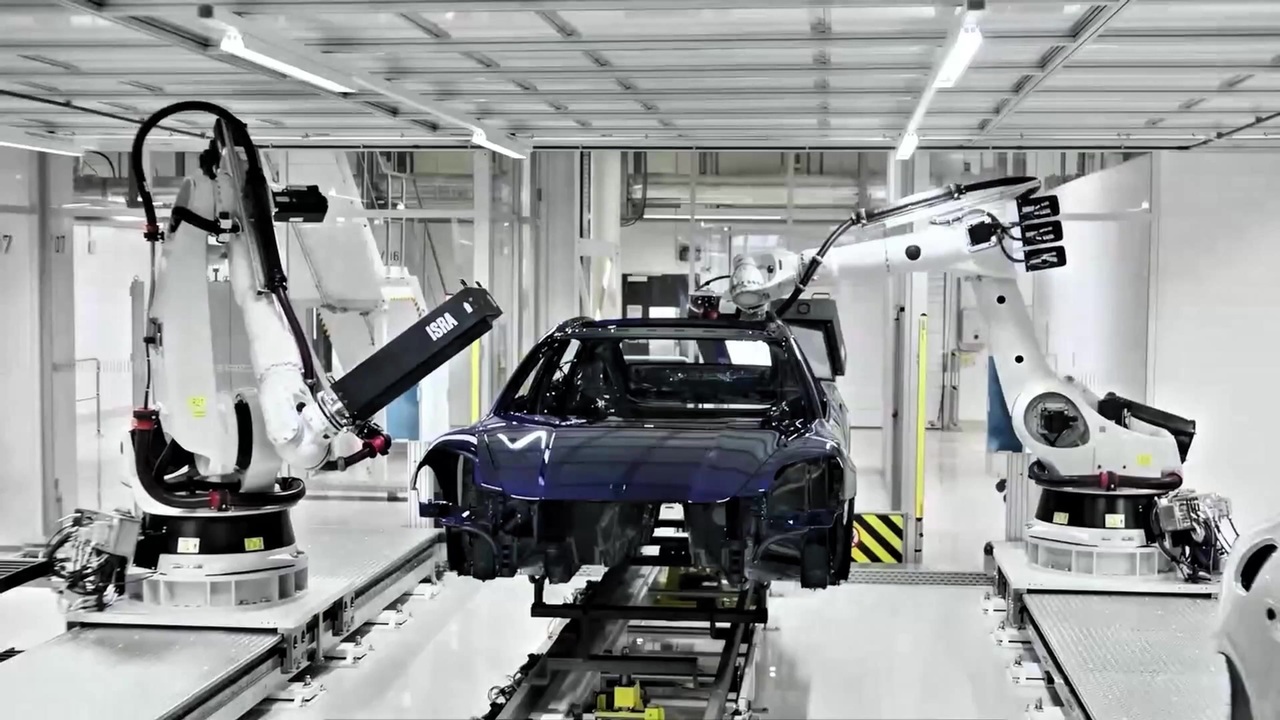


The battery system assembly plant, which opened last December in the SEAT & CUPRA premises in Martorell, overlooks the workshops where the company’s models are produced every day. Built in just over two years, it’s a key facility for the transformation of the factory, which has already become a hub for electric mobility. Leading the Volkswagen Group’s Brand Group Core MEB21 platform to promote electrification from the Iberian Peninsula, the battery system assembly plant, also known Workshop 20, assembles the batteries that power the CUPRA Raval, the first electric urban car produced in Martorell, as well as the Volkswagen ID. Polo.
This is the actual journey of a battery, from the moment its components are assembled to its installation in the car.
PARTS OF AN ELECTRIC WHOLE
The battery is made up of 468 components which, when grouped according to their function, can easily be compared to the human body: its cells, 96 in the 56 kWh version and 102 in the 38.5 kWh one, serve as the energy-generating heart and are contained within an aluminium case that acts as the skeleton. Meanwhile, the EBOX electronic unit could be compared to the brain, while the various covers and caps that ensure a tight seal could well be its skin.
INNOVATION THAT MAKES THE DIFFERENCE
The production of this battery at the Martorell plant is groundbreaking in many respects. The most significant innovation is the introduction of the ‘Cell2Pack’ concept, which involves assembling the cells directly into three stacks, unlike the batteries currently in use in Europe, which group the cells into separate modules, with these modules then being assembled into the battery. “It's the most advanced technology in the Volkswagen Group, which enables us to be more efficient and achieve greater energy density: the battery takes up less space but at the same time stores more energy” explains Alejandra Alonso, Battery Industrialisation Project Coordinator at SEAT & CUPRA. In this regard, it also increases range, reduces weight, improves thermal management and results in lower production costs.
Another distinctive feature is the aluminium case that contains the cells, as it’s manufactured in a single piece using a single mould, in a pioneering process for the Volkswagen Group. “In contrast to the previous method, which involved casting the case components individually and welding them together during assembly, this new approach speeds up the process, eliminates the need for welding and reduces critical points” notes Lorant Skezely, Managing Director of SEAT & CUPRA Components. Following their successful implementation in the Workshop 20's batteries, both innovations will be rolled out to the rest of the Group’s brands.
A HARMONIOUS GROUP EFFORT
The 64,000-square-metre battery assembly plant in Martorell will be home to 500 people and 206 machines performing a carefully choreographed routine that will enable them to assemble 1,200 batteries a day or, in other words, one battery every 45 seconds.
“It all starts at the Components plant in El Prat de Llobregat, where the EBOX is assembled and delivered directly to Martorell” says Skezely. Once in Workshop 20, it’s fitted into the aluminium case, and then it’s time for the cells to get grouped into stacks, laser-welded to connect them together, and inserted into the structure. “Then the electronic connection is established, in a process we refer to as ‘wake-up’; the battery is sealed with the covers and the final electrical and watertightness tests are carried out” adds Alonso. The finished battery reaches the end of the line and is stored in an intermediate storage facility with a capacity of up to 1,700 units. But far from over, the journey has only just begun.
DESTINATION: WORKSHOP 10
To reach Workshop 10, where the production lines for the CUPRA Raval and the Volkswagen ID. Polo are located, the battery has to leave Workshop 20 and make its way through the Martorell plant. “It’s a fully automated process in which the batteries travel through a 600-metre bridge, overcoming elevation differences, in just over 49 minutes” says Juan Carlos Muñoz, Logistics PM at SEAT & CUPRA Components.
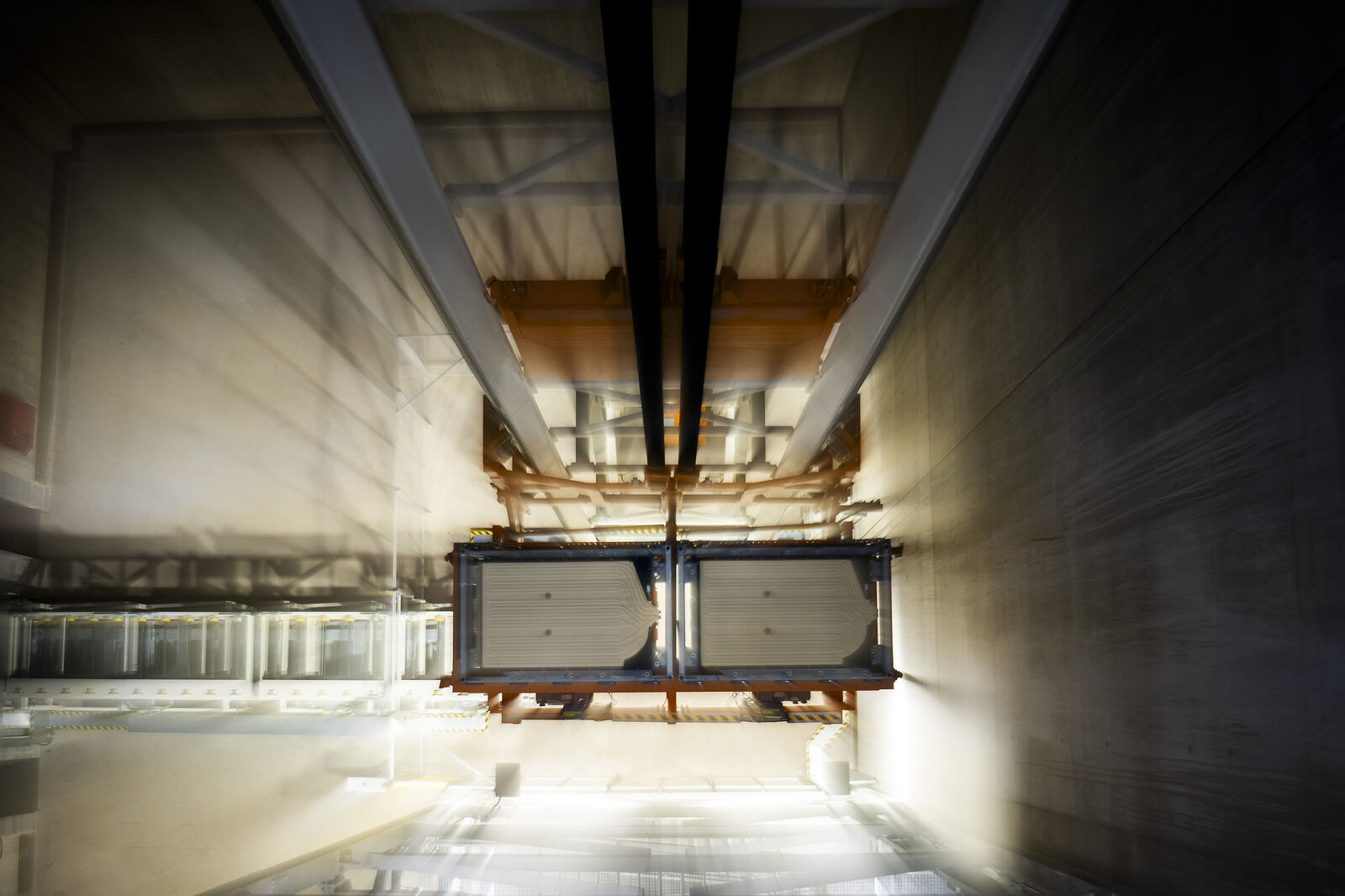
The leaves storage down a 15.5-metre pit to reach the bridge. “It’s the first of four lifts it’ll take along the way to overcome the varying height differences, and the one with the greatest vertical drop” Muñoz points out. Once in the bridge, which is 5 metres above ground level, it travels 600 metres along a conveyor belt, ending its journey in Workshop 10 where it gets installed, alongside the motor, in a CUPRA Raval that’s ready for the new era.