How Volkswagen is accelerating innovation in vehicle development
Werner Tietz, Head of Group Research and Development at Volkswagen, outlines how artificial intelligence is transforming vehicle development across the Group. By integrating AI into core engineering processes, development cycles can be shortened while improving efficiency and quality.
The role of AI in engineering and development
Artificial intelligence is increasingly present everywhere – including at Volkswagen. What exactly are you doing with this technology?
Development is highly complex, interconnected and driven by efficiency – which is why it benefits particularly strongly from AI. Our goal is to apply AI in product development wherever it can make us faster and better today.
In 2025 alone, more than 100 AI-based processes were put into productive use within Technical Development. Across the Group, there are over 1,400 applications. AI supports us in development, testing, simulation and validation – precisely in areas that have traditionally required significant time and resources.
Isn’t this something other companies are doing as well?
Most companies are working on AI today. The difference lies in how consistently it is applied. At Volkswagen, AI is not an add-on or a standalone project – it is an integral part of how we work.
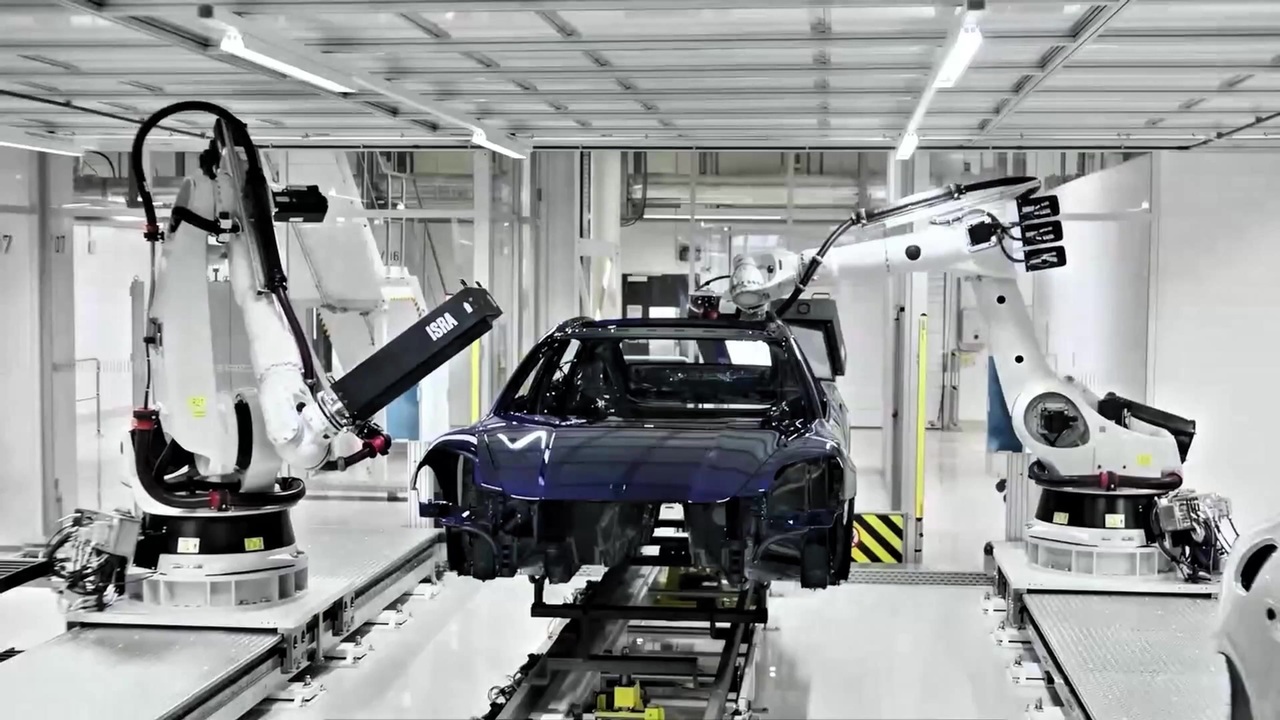
Our experience, engineering expertise and creativity remain the foundation. Building on this, we have designed processes in which AI actively contributes – from early-stage design through simulation to software testing. This accelerates decision-making, reduces friction and brings us measurably closer to series production.
Where do teams experience the benefits in concrete terms?
Primarily in terms of time, quality and focus. AI takes over repetitive tasks such as testing, analysis and documentation.
One example is our proprietary tool GHOST, which automatically tests software functions in infotainment systems – including touch interactions, effectively “pressing buttons” like a human. The result: no documentation errors, reproducible testing and faster release cycles.
At the same time, developers can concentrate on what truly makes a difference – creating innovative and valuable functions for customers.
Does this fundamentally change the role of engineers?
Yes – but not in terms of replacement, rather in terms of empowerment.
AI can take over time-consuming, repetitive tasks and shifts the focus of engineering work. Engineers continue to develop ideas and remain responsible for systems, while having access to significantly more powerful tools.
We often refer to “AI-accelerated engineers” – professionals who see AI not as a substitute, but as an amplifier of their capabilities. This requires openness to new technologies, continuous learning and a willingness to rethink established ways of working. At the same time, it creates the space needed to focus on genuine innovation.
Does this approach also extend into academia?
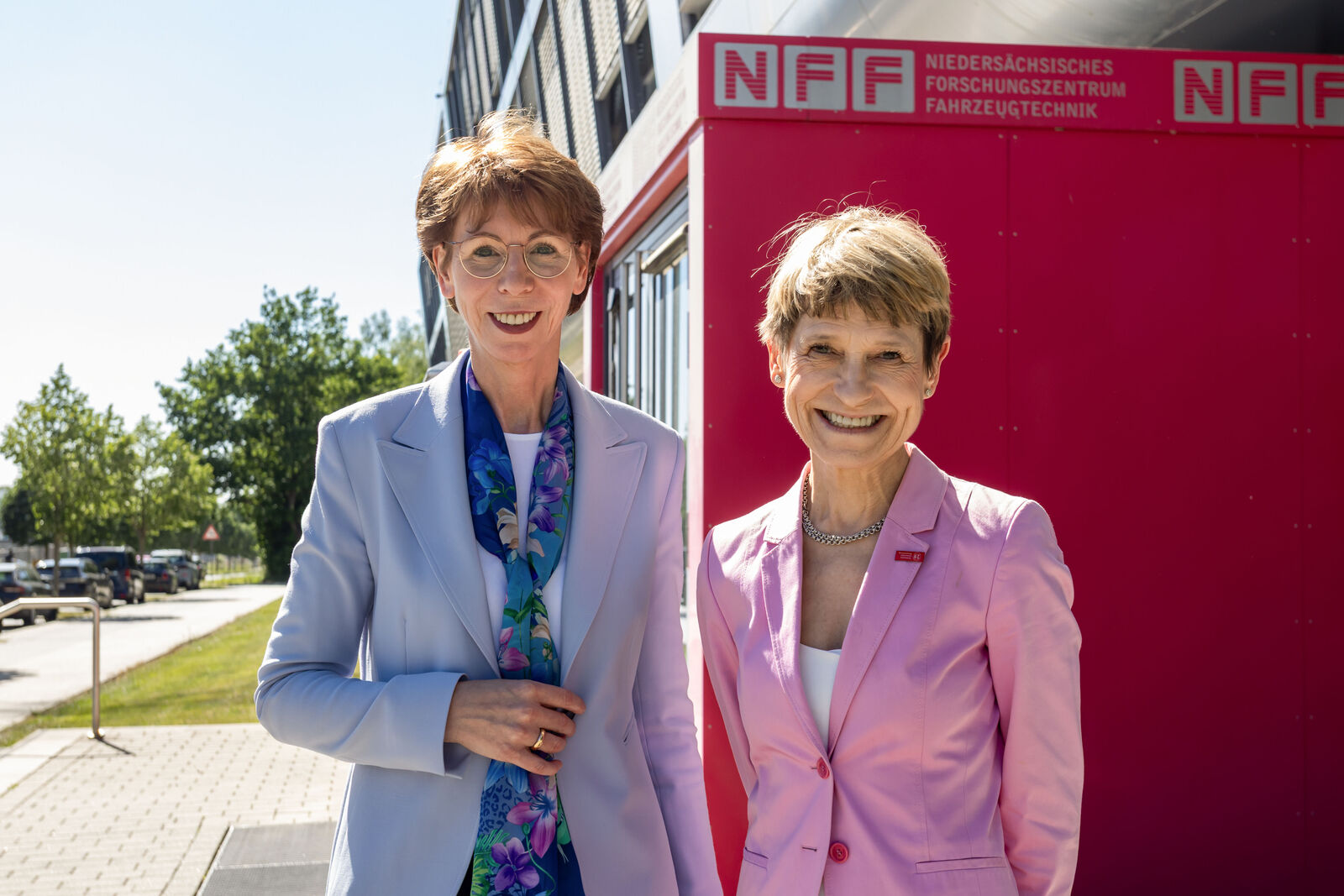
Volkswagen recently established a new AI professorship together with TU Braunschweig. Working with AI-based development tools and understanding their potential should not begin only within the company.
We therefore advocate for stronger integration of AI into engineering education. Our partnerships with universities, including close collaboration with TU Braunschweig, aim to support this development.
How does this AI-supported way of working help in the Chinese market, where Volkswagen is often perceived as too slow?
We observe developments closely, but do not follow others uncritically.
In China, we develop locally and independently together with our partner XPENG. The China Electronic Architecture is already in series production. At the same time, we are advancing the architecture for the software-defined vehicle (SDV) in the Western world through our joint venture Rivian.
This means: we move at speed, but in a controlled manner. Partnerships are used selectively to increase speed where it matters.
What does this new mindset change in development overall?
We are becoming more open, more integrated and collaborating earlier – across disciplines and regions.
Software, electronics, vehicle development and IT are no longer developed sequentially, but together. The focus is on end-to-end integration of processes. This enables us to validate innovations earlier and bring them into series production faster.
AI makes our development work more efficient – and therefore more competitive. Our ambition is clear: a development time of under 36 months, around 25 percent faster than today.
How will it become clear in the future that Volkswagen is not following technologically, but actively shaping the industry?
Not through individual announcements, but through consistent delivery.
If new functions are introduced more rapidly, updates run reliably and products are developed on the basis of modern architectures, this demonstrates our ambition to be a global automotive technology driver. That is ultimately how we will be measured.
Further information
New Professorship: Volkswagen Group and Technische Universität Braunschweig Strengthen Research on AI and Mobility
Volkswagen Group and Technische Universität (TU) Braunschweig are establishing a new professorship for “AI Methods in Product Development”. The goal of the partnership is to further expand top level research in the mobility sector and accelerate the transfer of scientific knowledge into industrial practice.
The specified fuel consumption and emission data does not refer to a single vehicle and is not part of the offer but is only intended for comparison between different types of vehicles. Additional equipment and accessories (additional components, tyre formats, etc.) can alter relevant vehicle parameters such as weight, rolling resistance and aerodynamics, affecting the vehicle's fuel consumption, power consumption, CO₂ emissions and driving performance values in addition to weather and traffic conditions and individual driving behavior.
Further information on official fuel consumption data and official specific CO₂ emissions for new passenger cars can be found in the "Guide to fuel economy, CO₂ emissions and power consumption for new passenger car models", which is available free of charge from all sales dealerships and from DAT Deutsche Automobil Treuhand GmbH, Hellmuth-Hirth-Str. 1, D-73760 Ostfildern, Germany and at www.dat.de/co2.