


Date: 08/21/2026
Volkswagen Group Future Plan

All information on the Future Plan 2030 and the transformation of the Volkswagen Group.
The Volkswagen Group is navigating one of the most significant transformations in automotive industry history. Rising competition from China, changing global trade conditions, geopolitical uncertainty and increasing market pressure are reshaping the environment for all manufacturers.
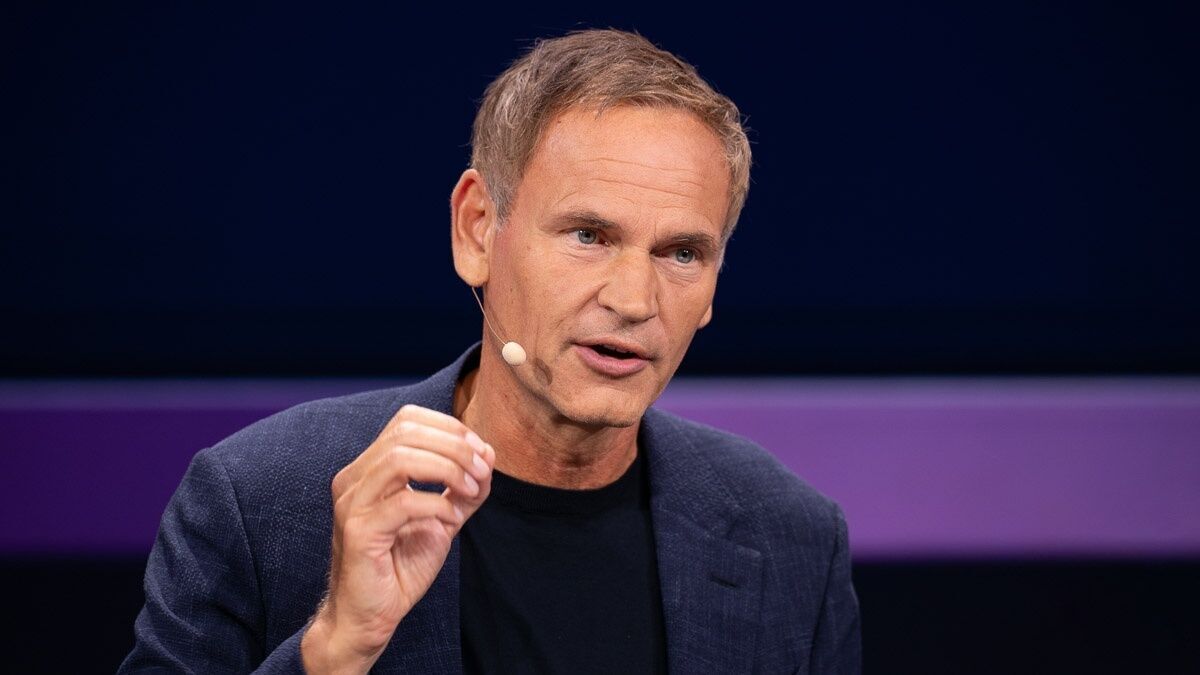
In this interview, CEO Oliver Blume explains why Volkswagen remains operationally resilient despite ongoing challenges, how the Group has strengthened its products, technology and competitiveness in recent years, and why the company's future plan goes far beyond a cost-cutting program. The focus is on sustainable profitability, technological leadership, streamlined structures and securing long-term growth, investment capacity and employment across the Group.
Date: 08/21/2026
First and foremost, a clear one: the Volkswagen Group is capable of acting. I understand, of course, that many people are concerned by these headlines. That makes it all the more important to look at the facts. By now, the results of all major manufacturers are in. Everyone is struggling. This is not a Volkswagen crisis – it is a challenge affecting the entire automotive industry. We’re proving resilient compared to the competition.
With a 3.8 percent operating return at Group level, we are in line with the industry average. In our core automotive business, we are even ahead of competitors that were significantly more profitable until recently. And with a net cash flow of more than three billion euros, we are on a solid financial footing. But comparisons do us no good economically – only the absolute figures matter. And those figures, taken as a whole, are still too weak.
The Volkswagen Group is making money. After all costs, something does remain – just not enough to finance the future. If we do not want to live by using our reserves, we must continue to act decisively. We cannot be satisfied, as is the case, with earning less than the previous year for ten consecutive quarters. That does not diminish the performance of our teams. On the contrary: what we have achieved is remarkable. Nevertheless, we need to break the downward spiral.
In many areas, we are stronger today than ever before. We have made tangible improvements to our products in terms of technology, design and quality. We have gained market share and were stronger in Europe in 2025 than ever before – in both combustion engines and electric vehicles. Our cars are winning more comparison tests and awards than ever before. At the same time, Volkswagen Group’s quality, warranty and claims data are reaching record highs. We can be proud of that. And it shows that the hard work of recent years is paying off. Porsche has ranked first in the prestigious J.D. Power U.S. customer satisfaction study.
We have stabilized our software, repositioned our regions – China above all – and made them more competitive. And we have significantly reduced our costs. Our cross-brand programs alone are delivering improvements running into double-digit billions.
The problem is simply this: much of that is not immediately visible, because it is overshadowed by the enormous external financial pressures we can barely influence ourselves.
Because we have to distinguish between our current performance and the challenges we face today and in the future.
We are in the biggest transformation in the history of the global automotive industry. Everyone is affected: by US tariffs, by the collapse of the Chinese market and massive price erosion there, by geopolitical conflicts such as those in the Persian Gulf, by ever-harder competition in Europe and by sweeping regulation. Every manufacturer and supplier must find answers to these challenges today.
As a fully global company, every one of these effects hits us in full force – and at the same time. But we started early in putting together the necessary changes and acting decisively. More than three years ago, we began comprehensively repositioning the Group and our brands, both operationally and strategically. We are benefiting from that today.
We see it in our brands. With a 4.9 percent operating return, the Brand Group Core is performing better than the competition in the volume segment. The Brand Group Progressive is also above average, at 3.8 percent. Bentley and, in particular, Lamborghini remain stable. At Audi, we have turned the corner. And Porsche, following its comprehensive repositioning last year, is already back on the promised upward trajectory, having raised its operating return to 7.8 percent at the half-year mark.
Our programs set the right course and are delivering concrete results. Without our extensive cost work, without the progress on our products and without the many changes within our brands and subsidiaries, we would not have come close to weathering the economic and geopolitical challenges of recent years with such resilience. That is why we are well-positioned to tackle the phase ahead under our own steam.
No. The situation is more than critical. A 3.8 percent operating return is solid in this demanding environment. But it falls far short of sustainably generating the funds we need– for new technologies, new products and our sites. Yes, the repositioning has given us the means to act. But these challenges mean we must.
Because our most important markets have changed dramatically. Look at China. The overall market there has contracted by more than 20 percent since the start of the year.At the same time, predominantly domestic manufacturers have launched more than 500 new models since the start of the year alone. Prices have fallen by more than 15 percent in just two years. Less demand. More competition. More price pressure. That is weighing heavily on our business. And this pressure does not stay in China.
China has massive overcapacity. This year, we expect exports of more than ten million vehicles. Chinese manufacturers are pushing aggressively into Europe as well and gaining market share rapidly – already 9 percent in 2026 and growing rapidly. These vehicles are sold at Chinese price points we cannot match with European cost structures. In the case of plug-in hybrids, unlike pure electric vehicles, the models enter Europe without additional tariffs. In the second quarter, more than one in three newly registered plug-in hybrids in Europe came from Chinese manufacturers.
There, too, the conditions have changed fundamentally. Two years ago, we paid 2.5 percent tariffs on vehicles from Europe. Today it is 15 percent and up to 27.5 percent on vehicles manufactured in Mexico. Our cars are becoming more expensive and therefore increasingly difficult to sell – not because they have got worse, but because the rules of the game have changed.
We do not expect it to. On the contrary. We have to assume that risks will intensify further worldwide. It would therefore be irresponsible to react only to the current challenges. We have to prepare the Volkswagen Group for what we anticipate. To reach far enough.
Many of these developments were not foreseeable eighteen months ago. And many of them are beyond our control. But it is our responsibility to act. It is in our own hands to draw the right conclusions wisely.
The world today is different from the world of 2024. For me, responsibility is not just about implementing decisions. Responsibility also means continually checking whether the underlying assumptions and conditions still hold. That is not a weakness. It is responsible leadership.
We have turned over every stone, developed a comprehensive strategy and drawn up a clear plan. The task is now to act decisively.
Nothing. Our future plan does not start tomorrow. We are in full swing. Many decisions have been taken and many measures have been initiated. Significant parts are already being implemented, without needing approval from higher-level governing bodies.
Take our equity stakes. Today, more than 2,000 investments belong to the Group. We have to ask ourselves honestly: what strengthens our core business? What creates value? And where are we tying up capital that we could deploy more effectively elsewhere? For significant areas, the Group Executive Board has already decided what the portfolio of the future will look like.
We are also making good progress in streamlining our model range. Many decisions for future generations have already been made. From 2027 onwards, it will become visible step by step how we are bringing less complexity and more focus to our portfolio. And here too, media headlines tell only part of the story.
It gets written quickly: “Volkswagen is cutting half its models.” That sounds like retreat. In fact, the opposite is true. Today we offer around 150 models across all brands. Our portfolio carries too many derivatives and redundancies across segments. In future, it will be around 75: that is still significantly more than the competition. With the aim of tailoring these even more precisely to the markets.
Our goal is more volume per model. That means less complexity, less effort in development and production. Dealers need to stock fewer spare parts. And it gives us more room for quality, innovation and attractive pricing, because we focus on the relevant products and do not spread ourselves too thin.
The same applies to the many variants within our vehicles. Let us be honest: configuring a vehicle today is often unnecessarily complicated. In the Brand Group Progressive, for example, we currently offer more than 2,600 seat variants. In future, it will be around 100. There are many areas like this. We are becoming simpler and we are becoming more efficient – not at the expense of quality, but in the interest of our customers.
Not at all. This is about focusing on what matters. Anyone who judges our future plan by individual measures alone is only seeing part of the picture. It is not about becoming smaller. It is about becoming stronger. We have spent the past months working out how the Volkswagen Group can remain successful in the future.
Even as we work resolutely on our costs, our plan is not a savings programme. Even as we work resolutely on our costs, our plan is not a savings program. It is a future program. Across all dimensions of our company.
We build on strengths that no one else has: on iconic brands for every segment – from the Volkswagen ID. Polo to the Porsche 911; on products that move millions of people from a first car of one's own to the family vehicle to the dream car. At the same time, we want to be at the very forefront of the technologies of the future – in software, batteries and automated driving.
We want to unlock the full potential of more than half a million people: experience, passion and ideas from around the world. And we want to use the scale of our Group more consistently: make faster decisions, become simpler and scale technology more strongly across brands. In short: we want to be a Volkswagen Group that is successful worldwide, sets technological benchmarks and at the same time remains firmly rooted in Germany.
Above all, we must become simpler. Over the years, we have built up structures, capacities and headcount. We are oversized. That often makes us too slow and complicated. Too many interfaces, too many layers, too many duplicate structures. Therein lies a great opportunity: if we become simpler, we will also become faster, more powerful and more successful. We want to earn enough money to remain competitive over the long term. To be able to invest in our future and remain a reliable employer.
Every individual measure matters. Their full effect only unfolds when they work together as an integrated plan. We are currently undertaking the most comprehensive future program in the history of our company. This task is demanding, exhausting and affects everyone in the organisation – whether in management, development, production or sales. Every contribution counts. We will only succeed if everyone in the company collectively embraces this plan. That requires a clear signal of departure: an unambiguous mandate from the Supervisory Board, giving the Executive Board trust, responsibility and unrestricted capacity to act, and endorsing the course we have set across the entire Group.
Because we have no time to lose. We deliberately put the future plan to a vote in July. Out of responsibility for the company and for the people at our sites around the world. The vote was the starting point for thorough but swift discussions. The challenges facing our industry allow no delay. Our competitors are not waiting for us. We get on with it and measure ourselves against the best.
The past weeks have been focused above all on refining topics further, deepening them, elaborating on individual points in greater detail and developing additional measures. At the same time, we have developed options to generate additional growth alongside the program – in various market regions, expanded customer offerings and strategic opportunities in industrial areas.
We are in close dialogue with the responsible representatives on both the shareholder and employee sides. At the July meeting, we perceived broad support from the Supervisory Board – for our analysis of the situation, the need to act and the path forward. For an undertaking of this magnitude, it is understandable to want to examine individual points more deeply and work out details. That is what the Group Executive Board has concentrated on in recent weeks. Everyone shares the ambition to reach the best possible solution – out of responsibility for the Volkswagen Group and our worldwide team.
I am fully aware that there is uncertainty, worry and anxiety – about jobs, sites and personal prospects. I understand how colleagues feel and take it absolutely seriously. I am in contact with many of them. Tendentious and speculative media coverage, often led by negative headlines, also creates unease and doubt. That does not help. We need to look forward and engage with the realities we face and the actions they require. That is why personal dialogue matters to me.
Works assemblies are an excellent platform for dialogue. They allow us to reach many people. With more than 275,000 employees in Germany alone and more than 600,000 worldwide, it is practically impossible to speak personally with every colleague. That is why I am grateful for every invitation to a works assembly.
We do communicate regularly and comprehensively on the current status of our future plan – at works assemblies, on the intranet, in discussion rounds with employees, managers and works councils. According to progress, and so far exclusively internally. In July, directly before the last Supervisory Board meeting, we held two full-day events with all international and German employee representatives, immediately followed by one with the entire global management. We also communicated through interviews and video messages for our teams at all sites.
There is no shortage of information or multipliers. Even so, nothing beats personal exchange. That is why the upcoming works assemblies are important to us.
Let me be very clear: what matters is the competitiveness of our sites. All European plants should have the same opportunity. The reality is: for Emden, Hanover, Zwickau and Neckarsulm, we do not currently see sufficient competitive utilization into the 2030s. In addition, we need to reduce overcapacities in Europe of more than 500,000 vehicles per year. But it is equally true: no decision to close specific plants has been taken.
I understand that. But both are true. The fact that a site has not yet secured future production does not mean it will close. What is also clear, however, is that our German sites are in fierce European competition with plants that are significantly better positioned on costs. Moreover, we cannot permanently maintain more production capacity than we can sell in the market, even at record market share.
That is true. We reduced factory costs at our German vehicle manufacturing sites by an average of 20 percent last year alone, showing how much progress we can make. That is encouraging. Improvements of this kind had not been achieved over decades. I explicitly thank all the teams in the plants for this exemplary commitment. A strong performance. But the truth is also that it is not yet enough. And that is before we even begin to talk about the cost structures of new competitors from China with their new plants in Europe.
The Group sets the financial targets and guardrails. The brands decide how to achieve them. Only profitable brands can invest. So that is why the brands are currently examining where they can manufacture their future vehicles at competitive cost.
Then our responsibility does not end. To be clear: plant closures are always the most expensive solution and the last resort. Should it become apparent, despite all efforts, that follow-on production assignment is not achievable, then the task is to create new perspectives – with partners, investors and new industrial solutions. For employment, for the people and for the site.
That is exactly what we are working on today. Osnabrück is one example. There, we are in advanced talks with companies from the defense industry. Our aspiration is clear: where vehicle production no longer has a future, we want to develop new industrial solutions early.
Much of what is currently being written conflates different topics. Our objective is clear: the Volkswagen Group must remain competitive over the long term. There are several levers for that.
The Volkswagen Group system has grown enormously over many years – in a different world, with different markets and under different rules. Now we have to adapt to the new reality. Since the end of 2024, we have agreed to reduce around 50,000 positions at Volkswagen, Audi, Porsche and CARIAD in Germany by 2030. Socially responsible, voluntary, and primarily through partial early retirement.
Our offers are being received positively. Around 37,000 signed contracts are already in place today. The Group is investing billions in stable retirement provision – and for those who remain, jobs become more secure through a better cost position. This is a necessity, but it is also a win-win situation for all.
I understand that such numbers cause uncertainty. What matters is: our costs in supporting functions – the so-called overheads – are still around 30 percent above the level of comparable companies. We cannot carry that disadvantage indefinitely and must reduce it. The frequently cited figure of around 50,000 positions worldwide is not a fixed target. It is derived from our cost target relative to the competition and provides orientation how significant our need for action is.
There is no single lever. It is about simpler structures, and more efficient processes and labor costs. That is why we are currently examining in all brands, subsidiaries and regions what contribution each individual measure can make. Only from that will it emerge what further adjustment is actually necessary. Our objective remains unchanged: to preserve as many jobs as possible and secure employment over the long term. And streamlining our company contributes to that.
From our history. And from what I experience in the company today. The Volkswagen Group has repeatedly overcome challenging situations: the oil crisis of the 1970s, the sales crisis of the early 1990s, and the financial crisis of 2008. We always found a way through and emerged from the crisis stronger. Together.
The difference today is we are not experiencing a normal cyclical downturn that will fade after a few years, but a profound transformation of our entire industry. We have many variables in play simultaneously, at a very high pace of change. That makes the task more demanding. But it does not make it unsolvable.
I draw my confidence from the fact that we have analysed the challenges and identified them clearly. We know what needs to be done and are ready to take the necessary steps – even when it is uncomfortable at times and demands a great deal from everyone. Above all, I sense within the company that most people have understood what is now at stake. Our shared future.
Accepting reality – and shaping it. The Volkswagen Group has always been strongest when economic reason and social responsibility came together. Not when positions collided. But when people worked together in search of forward-looking, pragmatic, sustainable solutions. That is what matters now. And that is what I am counting on.
All information on the Future Plan 2030 and the transformation of the Volkswagen Group.
