


Date: 07/13/2026
Volkswagen Group Future Plan

All information on the Future Plan 2030 and the transformation of the Volkswagen Group.
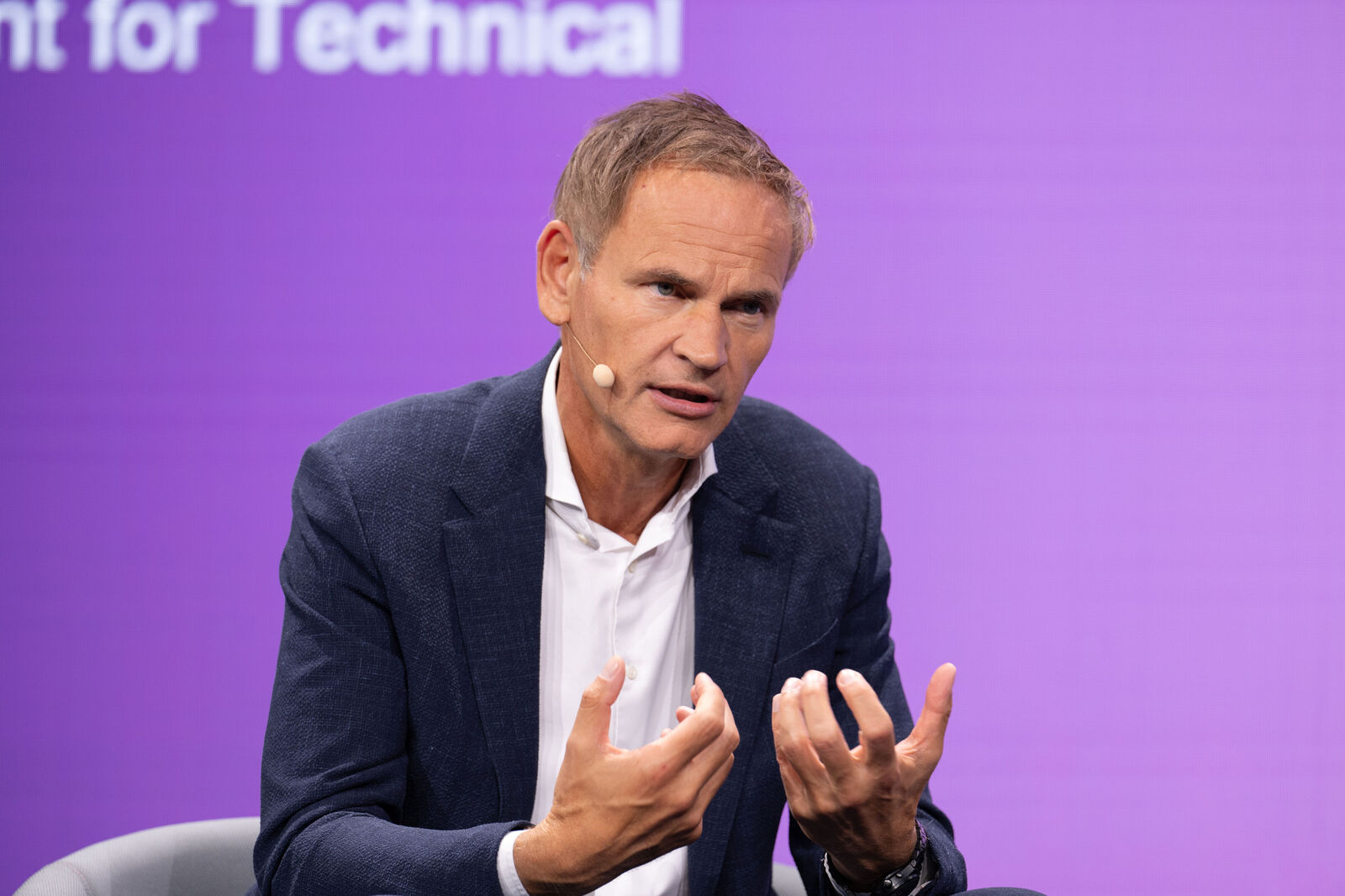
In an interview, the Group CEO speaks about the future plan for the company and the next steps in its implementation, the strength of the Volkswagen Group, and the challenging conditions facing the automotive industry.
Date: 07/13/2026
People across the Group are thinking about our company's future – and most of all, what the next steps will concretely look like. That is precisely why the Supervisory Board meeting on Thursday was an important step. There was considerable speculation in the media beforehand – with varying tone and, in part, incorrect information.
What is correct is that the Executive Board has now presented the Supervisory Board – following two preparatory sessions in spring – with a comprehensive overall concept for the realignment of the Volkswagen Group: twelve initiatives, around 150 pages, and 45 individual resolutions.
Even though the media may have created a different impression: the discussions in the Supervisory Board were very constructive and detailed. We are making good progress. Despite genuinely controversial positions in the debate, I sense broad support within the Supervisory Board: for our analysis of the situation and for the need to act. Developing the overall plan for the future direction of the Volkswagen Group received positive feedback.
Because this is a very comprehensive overall package - unprecedented in its form, depth of analysis, and level of detail for the Group. Of course, it is understandable that not every last detail has been fully planned out yet, and that individual topics still need to be discussed and assessed further.
Since January, the Group Executive Board has been working on the future plan, our Group Target Picture 2030. With the aim of making our company more robust, faster, and long-term more competitive. It is not a project with a beginning and an end, but a continuous process with many milestones. It is the most comprehensive realignment in the company's history.
What matters to us is this: the future plan only works as an overall concept. The measures are interconnected and only develop their full impact when they work together.
We will deepen individual points further, answer open questions, and continue the constructive dialogue. There will certainly be further meetings in which we work hard to find the best solutions. We have no choice and no time to waste in bringing the overall concept to fruition, so as to long-term secure the future viability of our Group.
Quite the opposite. We have long since begun. Many decisions have been taken and are under way. The clear majority of the topics in the future plan falls within the responsibility of the Executive Boards of the Group, its brands, and its subsidiaries. No additional approval is required for that. Furthermore, we are not starting from scratch. We are building on many topics from the successful realignment we began three years ago. We are continuing along that path with determination.
Europe is under massive economic and geopolitical pressure. Germany, as an export nation, is particularly affected. And in the automotive industry, the challenges are visible as if through a magnifying glass. The Volkswagen Group is therefore not alone in this extremely challenging environment. All companies in the industry – manufacturers and suppliers alike – face the same tasks. The three major automotive markets in the world - China, the US, and Europe - have changed completely in a short space of time. In terms of market, technology, and economics.
Over the past three years, we have already comprehensively repositioned our Group - with major advances in our products in terms of design, quality, and technology. We have stabilized our software and established a global strategy, strengthened our regions, realigned our China strategy and shifted it into delivery mode. And we have implemented extensive performance programs across the brands, with which we have long-term offset external impacts running into double-digit billions. That was only possible because the Volkswagen Group can rely on a strong team that is deeply committed to the success and future of our company. That is something we can all be proud of.
And it is only for that reason that we can now enter the next phase of the transformation from a position of strength. A significant advantage that sets us apart from many competitors.
Because the conditions have deteriorated considerably again over the past twelve months.
Geopolitical crises are weighing on markets and supply chains. Regulatory requirements and trade barriers are increasing. The new US tariffs alone burden our operating result by up to 5 billion euros annually. On top of that come profound market disruptions worldwide. In China, all automotive companies are no longer achieving the margins of previous years - more than 150 competitors are active in the market, with a price decline of more than 15 percent in recent years alone. At the same time, Chinese manufacturers are pushing aggressively into Europe. In the plug-in hybrid market, which is not protected by EU tariffs, they have already captured a 31 percent share – and that affects us in our home market. Despite better products, we cannot match the cost and pricing of export models from China.
We can already see in the competitive landscape today how quickly companies can slide into the red.
That is why we must act now – and move into the next phase of the transformation. We can be grateful that we have achieved so much over the past years. We have strengthened our substance and thereby have our future in our own hands. Our future plan builds on this strength.
In short: we need to become more efficient, more robust, and simpler. We need to reduce our costs. That is why we are reducing complexity in our processes, structures, and products. Our model range will, for example, be streamlined by up to 50 percent in stages – particularly in terms of the many derivatives. The variety of variants will be significantly reduced. Without any disadvantage for our customers and without losing sales volume.
Platforms, electronic architectures, and software will be harmonized and concentrated on the requirements of the western and eastern hemispheres. The aim is to make better use of synergies, avoid parallel structures, and further strengthen our technological competitiveness. Our greatest strength lies in the platforms and modules that we can scale and roll out across the Group.
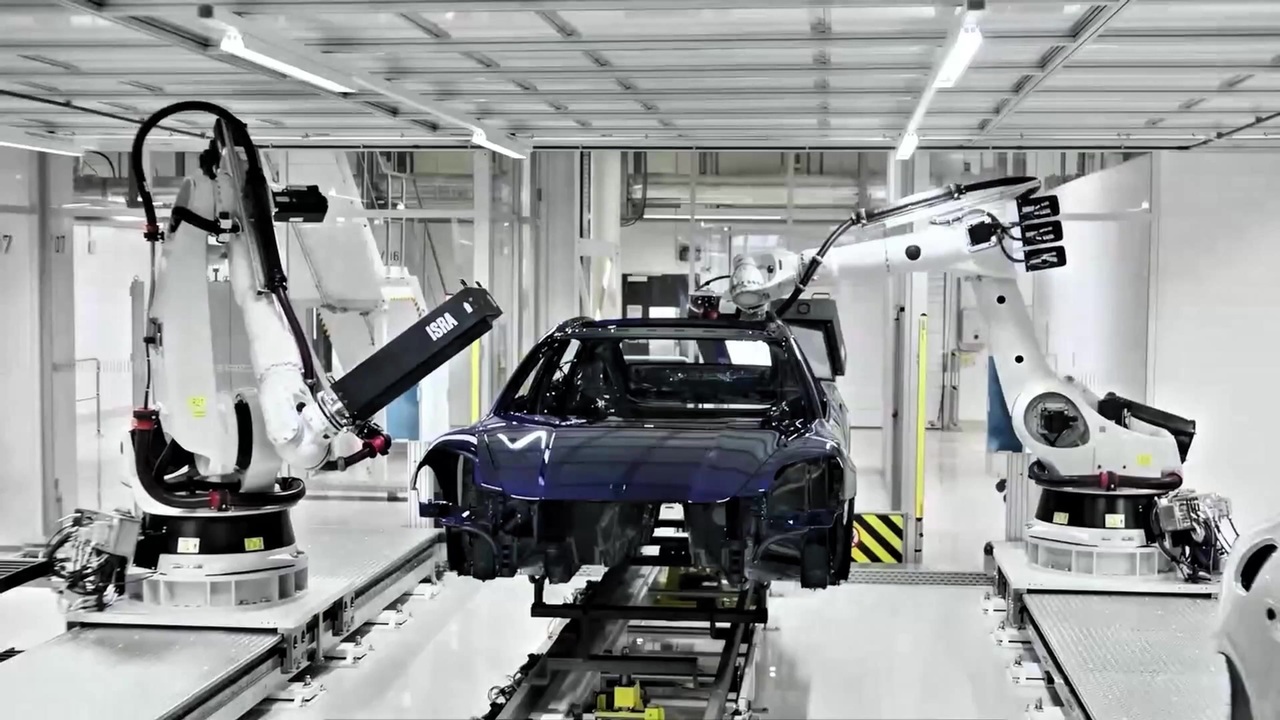
What is correct is that we are adapting our production network to the massively changed market conditions. Across the Group, we are aligning ourselves for the future to market-appropriate demand of around 9 million vehicles per year. Before the COVID-19 pandemic, our production was designed for 12 million units – based on considerably more optimistic assumptions at the time. The good news: over the past two years, we have already been able to reduce excess capacity by two million units worldwide. A further 500,000 units in China are in progress. And a similar scale of action follows next in Europe and Germany.
Excess capacity costs money and ties up capital. The truth is also that we cannot, confirm competitive utilization for the Emden, Hanover, Zwickau, and Neckarsulm plants in the 2030s, today. What is important for me to emphasize here: intelligent solutions are always preferable to closing a plant. Competitiveness by European standards is the best answer – and that is something we in Germany cannot afford to ignore. The reduction of plant costs at Volkswagen's German locations by an average of 20 percent in the past year alone points in the right direction and is encouraging. We need to keep going on that path. We are also examining alternative solutions. For example, we are in advanced talks with companies from the defense industry regarding Osnabrück. Securing employment matters to us. We are committed to the competitiveness of Germany as an industrial location. Our future plan addresses that as well.
It is above all the right plan to develop our business model further and to make the company a reliable and future-proof employer for the long term. It is about products, technologies, regions, processes, investments, structures, and governance.
Of course, it is also about positioning our costs competitively and capitalizing on growth opportunities – in North America, for instance. At the same time, export opportunities are opening up with our new Chinese models in economically attractive markets such as India, Southeast Asia, Australia, Africa, the Middle East – and South America as well. We are also keeping an eye on opportunities in retail, in our financing offerings, and in forward-looking industrial fields.
It is therefore not a cost-cutting program, but a holistic plan for how we make our business model fit for the future – and how we, as a Group, successfully shape the greatest transformation the automotive industry. Sound economic management is the foundation of our company – it is the only basis on which we can be a good employer.
Here, too, the media has mixed things up. What is correct is that the headcount across the Group has grown over decades to a scale that is no longer sustainable today – given the changed markets and the external headwinds running into double-digit billions that are beyond our control. Back in 2024, we had already agreed to reduce around 50,000 positions at VW, Audi, Porsche, and CARIAD in Germany by 2030. In a socially responsible way. Voluntarily. Primarily through early retirement arrangements. Uptake of our offers has been excellent. We already have 37,000 signed agreements, and by the end of the year around 27,000 colleagues will have left the company. This part of the process is being implemented to a positive response. The company is bearing a significant financial commitment to providing attractive retirement provisions.
The next step is to bring our overhead costs to a competitive level – that is, the costs of administration, infrastructure, and support for our core business. We have benchmarked ourselves against the average of comparable companies and currently have a disadvantage of around 20 percent. Since half of overhead costs stem from personnel costs, a theoretical derivation without any change in labor costs would yield around 50,000 positions worldwide.
We are currently determining, across all brands, subsidiaries, and regions, how much adjustment is actually necessary and possible. Personnel costs are calculated not only on the basis of headcount, but also on labor costs per employee. We need to use this lever as well. That ultimately determines how much headcount reduction is required to keep pace with the competition on costs.
That is also an important area of action. Our shareholdings have grown enormously over decades and need to be streamlined. Within our portfolio of more than 2,000 subsidiaries, we are assessing who delivers a strategic contribution to our core automotive business, to returns, and to capital commitment. The agreement on the sale of the majority stake in Everllence is a good example. It strengthens our financial substance in terms of cash flow and liquidity by 7.4 billion euros. That gives us additional room to maneuver for the further development of the Group. At the same time, Everllence gains a partner who can invest powerfully in its future.
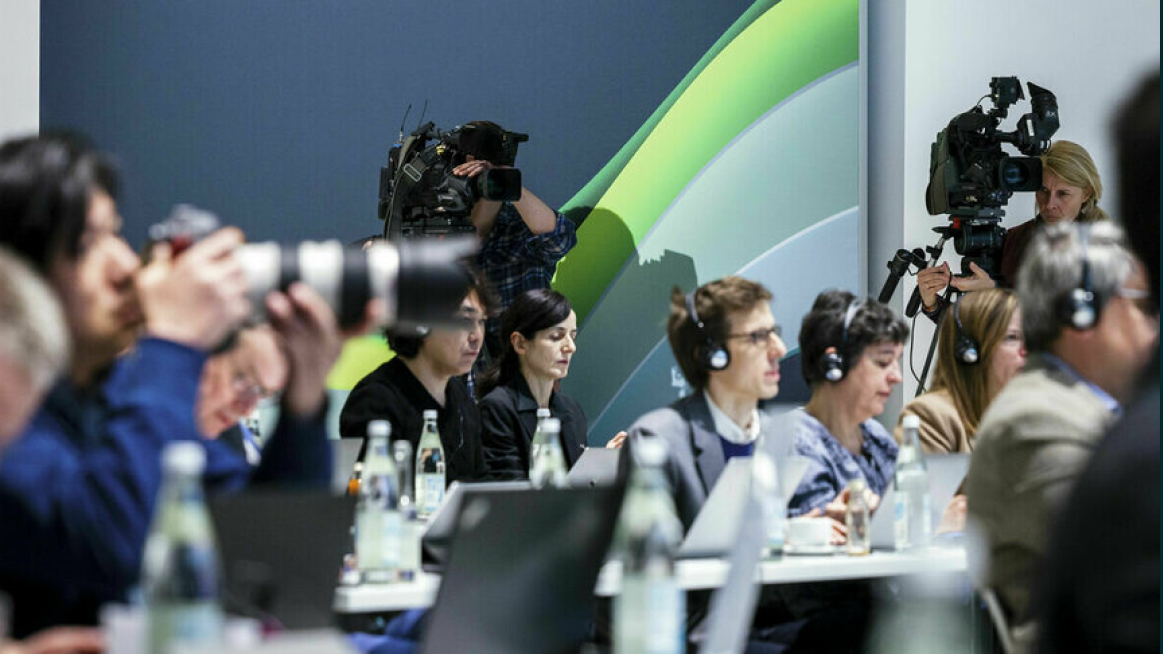
We have not shared detailed information with external media to date. Everything that has been reported is based on speculation and information that has made its way into the public domain from within our company in an uncontrolled manner – in many cases incomplete, incorrect, or framed with a deliberate spin. Comprehensive external communication on our part can officially only take place once resolutions have been passed in the confidential sessions of the Supervisory Board.
Internally, it is clear to us: transparency in this process is paramount. We will only be able to navigate this demanding path to the future successfully if everyone pulls together. That is why we continuously keep our colleagues and employee representatives informed about the status of planning - through internal channels, but above all in direct personal dialogue.
Since the first presentation of our concept to the Supervisory Board at the end of April, we have communicated through numerous formats: on the intranet, in various discussion formats, at works assemblies, and in many rounds within brands and subsidiaries. In addition, in numerous works council meetings – most recently with all international works councillors, and just last week with around 500 employee representatives from the German subsidiaries. With the Group Executive Board, we recently spent a full day with global top management, and in the evening we updated around 20,000 managers in a joint session on the current state of affairs.
That is very straightforward to explain: on measures that still require the approval of the relevant bodies, we cannot and must not communicate conclusively in advance. That would be neither responsible nor legally sound. That is also why I am personally deeply concerned by the media reports that bring internal documents into the public domain. Passing on such confidential, sensitive information not only unsettles our workforce – it is damaging to the business, since confidential information reaches our competitors. And: it is also a criminal offense. One thing I can promise: as soon as decisions are made, we will communicate them transparently and in full.
I fully understand how much the current situation affects the people in the company, but also everyone in their immediate surroundings. I have spent my entire professional life within the Group. Over the many years and at the various positions I have held, encounters with colleagues have always been particularly enriching. It is precisely for that reason that I am doing everything in my power to position Volkswagen so that our company can remain competitive in the future. Because only that way will it be possible to offer our teams worldwide a secure perspective. We have a unique company – and we have a strong team.
What matters now is that we walk the path ahead of us also together – with clarity about the challenges and the firm determination to shape the future of our company successfully. That means not only seeing the risks, but also the opportunities that lie within the Volkswagen Group. We have all shown impressively over the past three years what we are capable of. We can be proud of that. And it gives us confidence and strength. I will say it as I see it: we in the Volkswagen Group – with our strong brands, our international footprint, and our outstanding products – have, compared to the competition, the best conditions to successfully master this great transformation!
All information on the Future Plan 2030 and the transformation of the Volkswagen Group.
