State: 09/10/2026
The Volkswagen Group accelerates its transformation with clear strategy, focus and efficiency – articles and interviews provide insights.
With the unanimous approval of the Supervisory Board on September 3, 2026, the Future Plan has reached a decisive milestone. A strong signal: all parties involved are taking responsibility – for our entire team, our partners, and industrial jobs worldwide. This means the transformation of the Volkswagen Group is gaining further momentum. The following overview shows the core content of the Future Plan 2030.
State: 09/10/2026
With the unanimous approval of the Supervisory Board for the Future Plan 2030, a new chapter begins for the Volkswagen Group. The most comprehensive and far-reaching transformation program in the Group’s history will further accelerate the realignment of the company – together with all brands, companies, and employee representatives.
The Volkswagen Group is acting from a robust foundation: much has already been achieved together in recent years. In design, concepts, technology, and quality, the products have improved visibly and measurably. In Europe, the company holds its ground with a high market share as the market leader in combustion-engine and electric vehicles. The brands are winning more comparison tests and awards than ever before. Software development has been stabilized and realigned strategically worldwide with forward-looking technologies. The Group has consistently realigned the regions – China above all. Through cross-brand programs, costs have been massively reduced and the impact of external financial headwinds in the double-digit billions have been cushioned.
At the same time, the environment has changed fundamentally within just a few years. Geopolitical tensions are affecting supply chains and markets. Trade barriers are weighing on sales and results. Markets have changed completely or have been removed entirely from the sales map. In China, well over 100 new competitors have emerged. At the same time, technologies are developing ever faster and require great agility, professional innovation programs, and high investments. This is the greatest transformation the automotive industry has faced, playing out in a competitive environment under exceptional conditions.
With the Future Plan 2030, the Volkswagen Group and its brands are consistently adapting to the requirements of a fundamentally changing industry – while at the same time creating the conditions to actively seize the opportunities of this change. The target picture and the ambition are clearly set: to make the Volkswagen Group the most attractive automotive company in the world. With iconic brands, compelling products, exciting technologies, the best talent worldwide, and an efficiently organized company.
The basis for this is a focused product portfolio, best-in-class technologies, a future-proof business model, a unique brand positioning, increased earning power, efficient structures, and a sorted, streamlined shareholdings landscape. To achieve this, the Group is relying on twelve concrete initiatives. The focus here is on what counts: competitiveness and technology leadership, while at the same time increasing profitability.
“Our goal is clear: by 2030, we will make the Volkswagen Group the most attractive automotive company in the world – with iconic brands, inspiring products, leading technologies, robust financial results, reliable capital market performance and a team spirit in action. With our future plan, we are moving into the next phase of transformation by our own means. We are making the Volkswagen Group faster, more resilient and more competitive: through less complexity, focused technologies, an even stronger alignment of products, development and production with regional markets, the reduction of overcapacities, a streamlined equity portfolio and significantly leaner structures. In this way, we are creating the conditions for sustained success – even in an increasingly demanding environment.”![]()
The facts at a glance
Going forward, the Group is planning a financial framework based on an average global sales volume of 9 million vehicles. This is intended to generate an operating return on sales of 9 percent in 2030. This falls within the communicated financial ambition range of 8 to 10 percent and forms the basis for robust self-financing of the future business. It corresponds to an operating result of around EUR 31 billion in 2030. Overhead costs – that is, overarching expenses not attributable to any specific product – will be reduced by 20 percent and brought to a competitive level of EUR 37 billion. A target of EUR 135 billion is planned for advance expenditure for capital investments as well as expenses for research and development over the five-year period from 2027 to 2031. Despite a reduction of around 25 percent, the Volkswagen Group will continue to invest more than the competition – going forward, significantly more purposefully in focused products and technologies in segments with an optimal balance of sales volume and achievable profit.
By 2035, the Group will sharpen its product portfolio by 50 percent and align it even more closely with changing customer expectations in the various world regions. This means: fewer overlaps between segments, fewer derivatives, no duplicate structures, less effort. In return, more volume per model with higher margins. More focus on innovation, quality, and above all attractive prices. With a projected total of around 75 models across all brands, the Group will thus continue to offer the broadest range in the competitive field. Following the same principle, the complexity of equipment options is currently being reduced – by around 75 percent. This leads to significantly more targeted investments in better offer packages for our customers.
The central technology fields – platforms, hardware modules, electronics architectures, software applications, and driver assistance systems – are being aligned with the ecosystems and requirements of the western and eastern world regions. With a clear division of roles between strategically relevant proprietary core technologies, development partnerships, and acquisitions. With the goal of developing and scaling superior leading-edge technologies. In doing so, the complexity of the technology map is being significantly reduced – with the parallel approach of better leveraging synergies within the Group-wide development network and avoiding duplicate work.
The changed market environment requires adjustments to production capacities. The over-invested production network of more than 12 million vehicles per year has already been adjusted by 2 million units over the past two years. To achieve a capacity oriented toward market demand, a further 500,000 vehicles per year each need to be reduced in China and in Europe. At the same time, the aim is to increase economic efficiency in the European network by around EUR 1.5 billion per year. Building on this, the concept resolution of the Future Plan 2030 sets out the mandate to develop, by the end of June 2027, a concept for a sustainable and competitive European production structure. For the Emden, Zwickau, Hannover, and Neckarsulm plants, no competitive follow-on utilization – staggered from 2031 to 2034 – can be guaranteed under the current planning. In this context, alternative usage options are additionally being examined in order to develop viable prospects for the sites at an early stage.
In recent years, the Volkswagen Group has made significant progress on costs thanks to strong team performance. A robust basis with a functioning methodology, from which to further strengthen competitiveness going forward. The operating functional areas of development, procurement, production, quality, and sales have set up systematic programs to increase their efficiency. In total, costs are to be improved by around EUR 20 billion by 2030, measured against current planning. Areas of approach include leaner and more efficient development processes, significantly reduced material costs, improved manufacturing and warranty costs, as well as lower sales costs in the areas of disposition, sales aids, and commissions. In addition to the costs in the functional areas, a further focus is on overhead costs. Oriented toward the average level of the competition, a reduction of EUR 11 billion is targeted for 2030. Overhead costs are divided equally into material overhead costs and personnel costs. These result from the number of personnel and the respective labor costs.
An increasingly complex world and increasingly demanding tasks require professional leadership, fast decisions, and a high speed of implementation. Leaner structures, clear responsibilities, and shorter decision-making paths form the basis. A more balanced compensation model for executives, more strongly geared toward performance, places greater focus on individual contribution and links it to short- and long-term results orientation. At the same time, diversity in leadership teams is being further strengthened. More efficient management structures with newly defined roles create fields of deployment and opportunities for talent.
The Volkswagen Group is aligning its personnel capacities to a globally competitive size. This is based on a cross-brand analysis conducted as part of the Future Plan 2030. Determined across around 170 companies, and in addition to the programs already agreed in 2024/2025, this provides for a reduction on the order of around 50,000 positions – roughly half each in Germany and abroad. The brands and companies are mandated to plan this out in detail and implement it in coordination with the works council partners. Part of the personnel program is the adjustment of management structures. Measured against the competition, this results in a required streamlining of around a quarter of management positions. A reduction of 5,500, from around 21,500 today to 16,000 positions worldwide. The organization of the Volkswagen Group, which has grown considerably over decades, no longer matches today’s requirements and financial structures of a changed environment. For departing colleagues, the company assumes social responsibility, in particular through partial retirement programs. In this way, in the sense of a win-win situation, it is possible to secure the many remaining jobs through a more competitive cost position.
The Volkswagen Group today holds more than 2,000 shareholdings in companies of various sizes. In order to reduce complexity and deploy resources more purposefully, the portfolio is to be streamlined by around one third. What is decisive is which shareholdings strengthen the core business and contribute to the Group’s success. At the same time, the real estate portfolio is to be reviewed.
The Volkswagen Group is focusing on attractive growth and earnings potential in the regions. In North America, VW is being positioned with a strengthened focus on the US market, and Audi as a premium SUV manufacturer. The US portfolios are focused on high-volume and high-margin segments – above all market-relevant mid-size and larger SUVs and pick-ups. Partner selection in the region is becoming more selective, while the Volkswagen Group is placing greater emphasis on local production. In China, the realignment set up three years ago is being consistently developed further. The "In China, for China" strategy opens up new opportunities through the now massively strengthened competitiveness - in the fiercely contested Chinese market itself, in transferring experience and solutions to business fields worldwide, and in exports to market regions such as Asia, Australia, the Middle East, Africa, and South America.
In addition to the comprehensive realignment of the existing core business, the Future Plan 2030 includes numerous growth opportunities in the fields of markets, services, and industry. On the market side, these opportunities lie in particular in North America, in the export of Group products from China, and in India, now the world’s third-largest single market. Expanded, future-oriented offerings are being developed for our customers. This includes business expansions in fleet and major customers, after-sales, used vehicles, financing, and insurance. Currently promising growth areas lie in circular economy, energy storage, semiconductors, robotics, and defense. The growth areas are understood as an open pool of activities that are pursued in a targeted manner as a complement and in synergy with the core business. All dependent on the financeable expenditure and the respective earnings potential.
The Supervisory Board has asked the Group Board of Management to design a model for a further-developed decision-making and Group structure for the Volkswagen Group, in order to position the company in a way that is more efficient, leaner and more modern. This is intended to specifically leverage technological and other synergies and reduce costs across the Group. The further-developed structure is intended to create clear responsibilities as well as faster and more efficient Group management. In this context, the composition of the Group Board of Management, the rules of procedure and value thresholds, as well as the committee structure, are also to be reviewed and further developed.
The Future Plan 2030 is being implemented. Measures already initiated are being consistently continued, and the further steps are now being started immediately. Where agreements with employee representatives are required, coordination takes place in the relevant committees of the brands and companies. The Group Board of Management is responsible for the overall program and its steering.
It comes down to every single individual – to every team, every site, and every brand. Because implementation counts on the ground: with clear responsibility, consistent decision-making and action, and the shared ambition of advancing the agreed measures quickly and effectively.
The Volkswagen Group is entering the next phase of its transformation. To this end, the Group Executive Board has developed the "Group Target Picture 2030", a comprehensive program for the realignment of the Volkswagen Group. The objective is to make the Group faster, more resilient, more competitive, and even more innovative in the face of increasingly intense competition and geopolitical challenges. Initial steps have already been initiated; for example, complexity and the number of variants in the product portfolio are being reduced. Products, technologies, and development are being aligned even more closely with regional markets. Capacities in the production network are being adjusted to market expectations. Structures and the equity portfolio are being streamlined.
Over the past twelve months, the global situation has continued to change dramatically. Geopolitical tensions, rising costs – driven primarily by tariffs – growing regulatory requirements, and an increasingly intense global competitive environment have compounded the challenges facing the automotive industry in an already far-reaching phase of transformation. In response, the Executive Board of the Volkswagen Group has developed a comprehensive Future Plan that will make the company even more resilient against external influences and growing risks. This will strengthen its competitiveness and innovative capacity in the long term.
Technological excellence remains Volkswagen Group’s benchmark. The Group is streamlining its technology portfolio to leverage synergies and economies of scale to the fullest. Investments and development resources are being focused on the products and technologies that provide the most value to customers.
This does not mean lower quality, but rather a greater focus: for platforms, software, and driver assistance systems, the focus is on competitive solutions. Technological parallel structures are being eliminated, and synergies are being realized. The Group is freeing up funds by discontinuing niche models and overlapping offerings. Reallocating these resources to key areas allows the Group to achieve more with less.
Additionally, new digital and AI-supported development tools are taking efficiency to the next level by shortening development times and accelerating time-to-market for innovations. At the same time, the Volkswagen Group continues to leverage partnerships that deliver clear technological or customer value.
Overall, the Volkswagen Group is focusing on the key value drivers and reducing investments in non-core areas that do not offer added value for its customers. This is part of the Future Plan. It provides the right levers to strengthen the Volkswagen Group sustainably.
Every future model, from entry-level to luxury vehicles, will set the benchmark in its category for driving experience and technology. At the same time, complexity and costs will be reduced. To achieve this, the Volkswagen Group is aligning its product portfolio much more closely with customer needs. The model lineup will be streamlined by up to 50 percent. Development and production resources will be pooled, and unit volumes per model will be increased. In parallel, equipment options will be reduced by up to 75 percent. These will be replaced by clearly structured equipment packages that are easy to configure and provide direct cost savings to customers. For example: instead of offering over 2,300 seat variations, there will only be about 100 options in the future. The Group is eliminating features with low demand and scaling those that customers actually want. The result will be even higher quality at attractive prices.
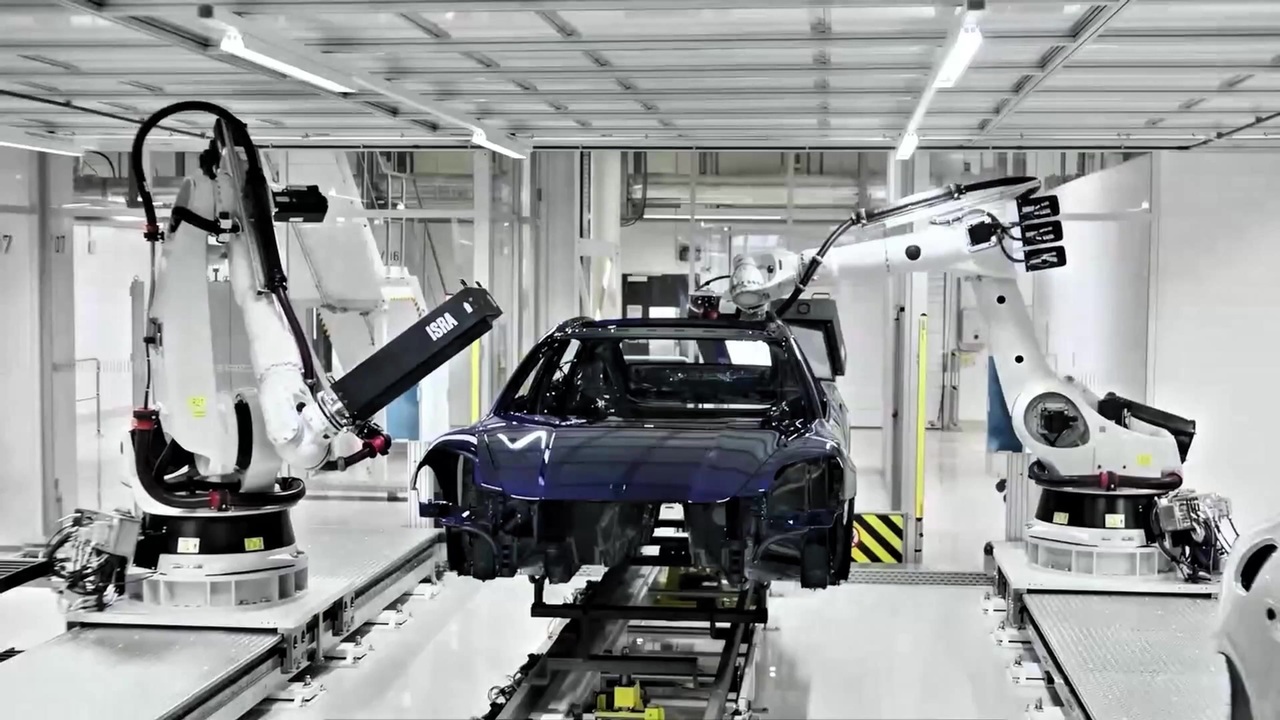
To align its production network with the shifting market environment and intensified competition, the Group will further streamline its technical capacities and lower factory costs.
The target volume across all brands is around 9 million units per year, driven by demand. Before the pandemic, the company had built up capacity for around 12 million vehicles. It has already made significant progress by reducing this figure by two million units. Further steps will follow in China and Europe. The guiding principle is to maximize capacity utilization at the most cost-effective, and therefore most competitive, plants in the coming years. The Group Executive Board decides which models will be built where and when during the Planning Round, subject to Supervisory Board approval.
In addition to reducing overcapacities, factory costs must be cut further. Compared to other European locations, production costs at German plants are still too high. On a positive note, however, factory costs at the Volkswagen brand's German plants were successfully reduced by an average of 20 percent last year. This demonstrates that the chosen approach is effective. However, securing a successful future requires further boosting competitiveness. This is the basis for the ongoing reviews.
The Volkswagen Group is refocusing on its core automotive business. Its portfolio will continue to cover all vehicle segments, from entry-level to luxury. The Group is rigorously evaluating its equity holdings and investments based on their strategic contribution, returns, and capital efficiency. The goal is to sharpen the Group's focus, reduce complexity, and create additional financial flexibility. Future decisions will be guided by their alignment with the Group strategy, the value they add to the overall portfolio, and their potential for synergies.
The Volkswagen Group is pursuing a dual strategy. First, it is strengthening its competitive positioning. Second, the Group is capitalizing on regional growth opportunities and tapping into additional profit pools in high-margin areas of the mobility sector, such as after-sales, used cars, fleet operations, and insurance.
Most of the measures in the Future Plan are the responsibility of the Executive Boards of the Group, brands, and companies – such as the product portfolio, the technology roadmap, and the production network. Implementation is already underway and is being rigorously driven forward. Only a few of the measures require Supervisory Board approval. The Group Executive Board has the Supervisory Board’s support regarding the situation analysis, the need for action, and the overall concept. However, specific details require further review to ensure that all components of the overall package can be implemented swiftly.
The Volkswagen Group accelerates its transformation with clear strategy, focus and efficiency – articles and interviews provide insights.
With "The Group Strategy – Mobility for Generations", the Volkswagen Group is pursuing a clear strategic roadmap up to 2035. The claim: to play an active role in shaping the transformation of the automotive industry – as "The Global Automotive Tech Driver".
The automotive industry is developing at a rapid pace. Innovative technologies are defining vehicle functions and the driving experience. The Volkswagen Group sees this transformation as an opportunity to shape the mobility of tomorrow as a global automotive technology driver – climate-neutral, digital and connected. Our pioneering solutions along the entire automotive value chain combine experience and efficiency, safety and sustainability. This enables us to inspire customers time and time again. All over the world.