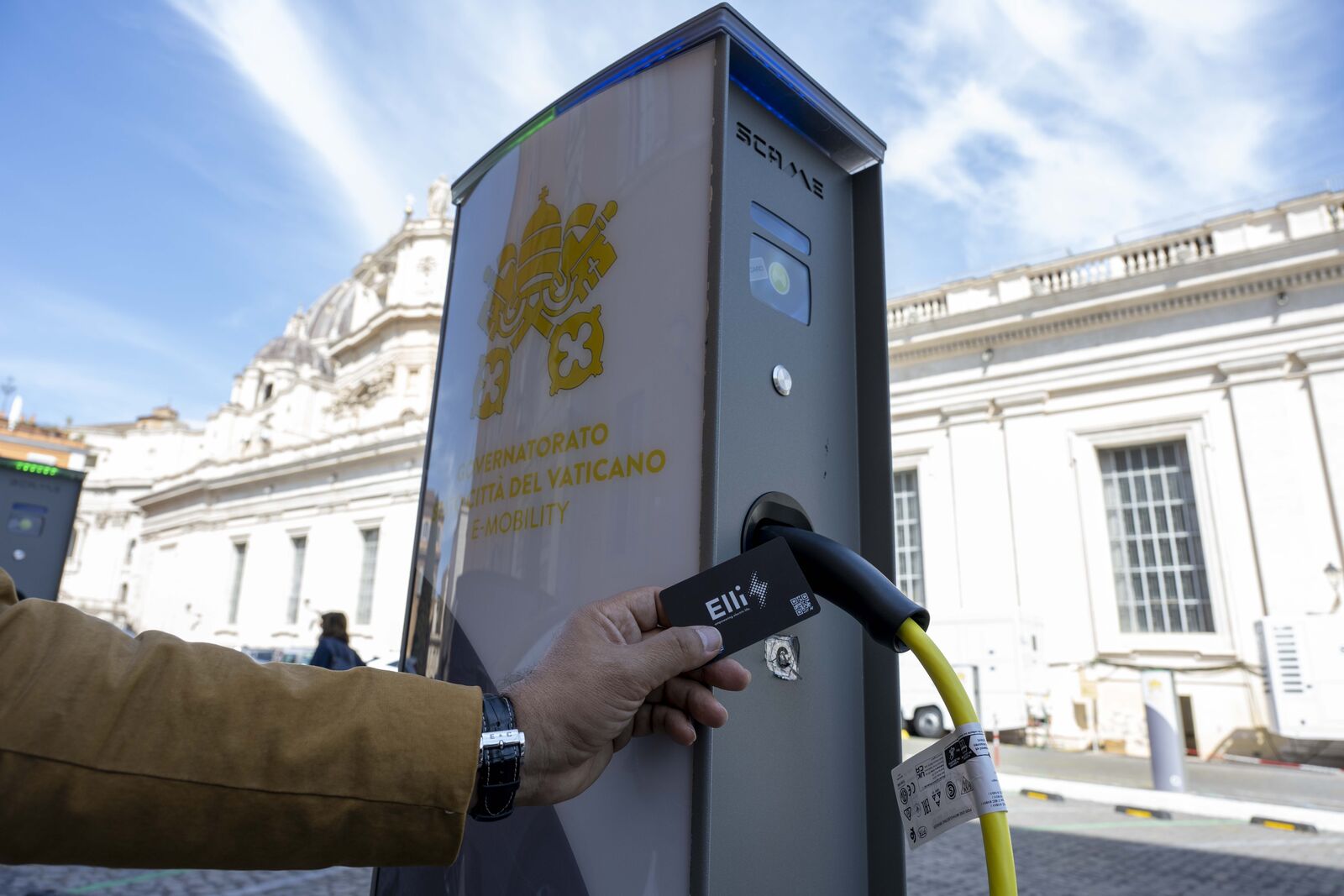






“Fleet electrification is accelerating across Europe, and institutions are looking for reliable partners to manage this transition. The Vatican illustrates that the real work of electrification begins after the vehicles are delivered,” says Giovanni Palazzo, CEO of Elli. “Our role is to translate the ambition of sustainable mobility into reliable day-to-day operations. This enables organisations to operate electric fleets efficiently across borders and to fully realise the economic benefits of electrification.”
Elli Mobility, the dedicated fleet and mobility services subsidiary from Elli, serves as the operational backbone for corporate fleet customers. This cooperation represents another step in the Vatican’s long-term sustainability strategy, which aims to convert the state’s vehicle fleet to climate-neutral mobility by 2030.
In recent years, the State of Vatican City has steadily expanded its electric mobility activities. In 2024, nearly 40 fully electric vehicles from Volkswagen’s ID. family were delivered as part of the ongoing fleet transition, followed by additional electric utility vehicles in 2025. Electric vehicles are expected to play an increasingly important role in the Vatican’s mobility operations as the fleet continues to evolve.
With Elli Mobility’s charging card, the employees of the Governorate of Vatican City State will also be able to gain access to more than one million public charging points across Europe, enabling drivers to charge easily during official travel beyond Vatican territory. The solution offers transparent tariffs for AC, DC and IONITY charging, allowing organisations to maintain clear cost control and predictable charging expenses.
At the same time, the Vatican administration will use Elli’s digital fleet management platform, Elli Fleet Charging, to centrally manage charging cards, charging sessions and billing processes. Fleet administrators can monitor charging activities, track energy consumption, assign cards digitally and export charging data for accounting and reporting purposes.
The development reflects a broader shift in corporate mobility: corporate fleets account for around two thirds of all new vehicle registrations in Europe. Fleet electrification is widely regarded as one of the most effective levers for reducing operational CO₂ emissions while improving transparency and efficiency in mobility-related energy use. However, the transition often requires new operational processes and digital tools.
An Elli Mobility survey conducted in Germany in August 2025 shows that many companies are still in the early stages of digital fleet management. According to the survey, 26 percent of companies manage their fleets using basic office tools such as spreadsheets, while another quarter uses no dedicated digital tools at all. As a result, efficiency gains and cost-saving potential often remain unrealised.
Today, more than 20,000 companies across Europe rely on solutions from Elli Mobility to manage their fleet infrastructure and mobility services. Elli Mobility supports companies and institutions in electrifying their fleets while managing the operational complexity of the mobility transition. The company positions itself as a partner for organisations navigating this transformation by enabling them to integrate electric vehicles into existing fleet structures and manage the realities of mixed fleets efficiently.