



Volkswagen Group’s new structuring on schedule
As the transformation and work on the new structure progress, the Group has already set essential cornerstones: with the largest model campaign in its history, significantly improved products as regards design, quality and technology, a new strategic orientation for the software organization, accumulating in-house battery competence, a stronger regional orientation, and comprehensive performance programs for the brands and companies.
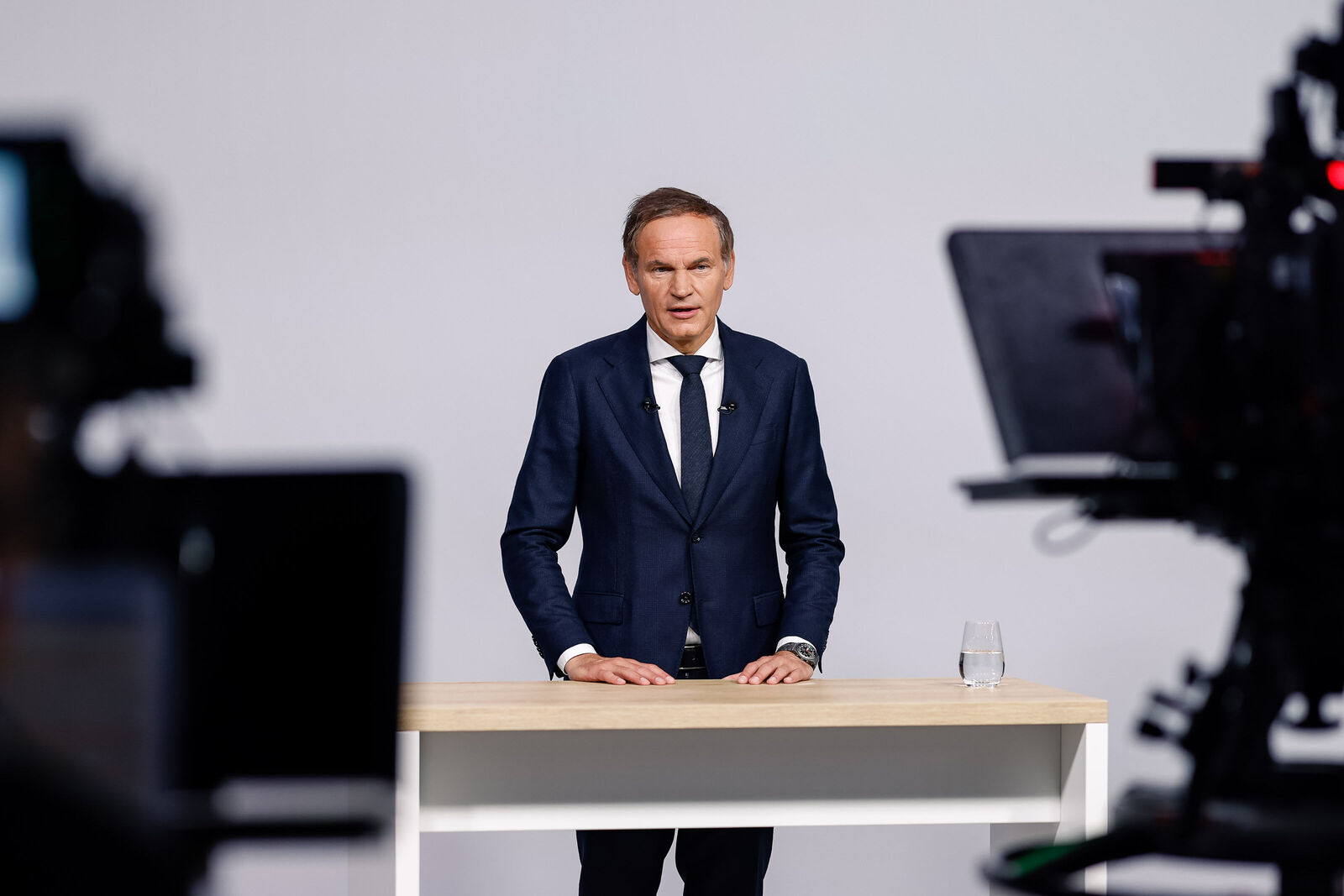
“All central strategic goals have been met. Some of them earlier than planned. And we achieved all of this at a time when the world is rapidly changing,” Oliver Blume said.
Group brands launched over 30 new models in 2025. They will be joined by a further 20 vehicles this year.
The Volkswagen Group sent a particularly strong signal in e-mobility. In 2025, global deliveries of all-electric vehicles grew by 32 percent. In Europe, growth was 66 percent – with a market share last year of 27 percent. This made the Volkswagen Group the market leader for all-electric vehicles in Europe – ahead of the competition by a large margin. Five of the ten best-selling electric models came from Group brands. And the Group is taking affordable e-mobility to the entry-level class with the electric urban car family – comprising the Volkswagen ID. Polo, Volkswagen ID. Cross, Cupra Raval, Škoda Epiq.
Building on the cooperation with Xpeng, the Group’s own advanced electrical/electronic architecture was developed and went into production in China in just 18 months. Development work on the zonal software architecture for the Western Hemisphere under the joint venture with Rivian is also fully on schedule.
With its PowerCo subsidiary, the Volkswagen Group is strengthening its battery expertise. The company is the first European manufacturer to develop and produce battery cells on an industrial scale. Production in Germany is currently being ramped up – followed by factories in Spain and Canada. Preparations for developing future battery generations are already underway.
The Volkswagen Group is also making headway cost-wise. Structured performance programs at all brands achieved progress in the double-digit billion range, thereby largely offsetting external financial headwinds. This was also attributable to collective bargaining agreements and workforce downsizing that generated sustainable cost effects of some 1 billion euros across the Group in 2025. Including the reduction in technical production capacities that has already been agreed, the target is annual net cost savings of over 6 billion euros by 2030. The Group is also on track with regard to job cuts. As agreed 50,000 jobs are to be cut at Volkswagen, Audi, Porsche and the software subsidiary CARIAD, 35,000 of these are jobs with Volkswagen AG, where binding agreements for more than 28,000 departures by 2030 have already been signed.
In addition, factory costs at Volkswagen’s German sites were already reduced by more than 20 percent on average in 2025 alone.
On this basis, the Group Board of Management has mapped out a plan for the future. The plan builds on the progress of recent years and aligns the Group for a permanently volatile market environment and a scenario of stable delivery volumes. The focus is on strong products, convincing technologies and consistent work on strengthening competitiveness.
Eight strategic areas of action for the next phase in the transformation
The plan centers on eight strategic levers to enable Volkswagen to sustainably boost its competitiveness:
- Reduce complexity
Volkswagen wants to make navigating the range of models and variants easier and to focus even more closely on the expectations of customers in the regions. This should generate higher volumes per model. - Streamline the technology toolkit
Fewer platforms and electronic architectures are to reduce complexity, increase development speed and lower expenditure. - Consistently align production network to market realities
Overcapacities are to be further reduced – the aim is a regional, intelligent and economic production network. - Strengthen regional growth
More local responsibility and decision-making leeway are to increase competitiveness in the most important markets. - Streamline the investment portfolio
Volkswagen wants to create leaner structures, reduce complexity and sharpen the focus on core business, as well as strengthening the balance sheet. - Increase operational excellence
Central functions such as development, procurement, production, sales and quality assurance have already been bundled at CEO level. In addition, systematic programs are to increase the efficiency and dynamic of operational units – unlocking additional potential in all cost types. - Strengthen performance culture
Fewer hierarchies, clear responsibilities and a performance-oriented incentive system are to consistently reward performance. - Improve Group steering
Leaner processes, clearer decision-making paths and more responsibility at all levels are to make the Group faster and more effective.
Clear ambition for 2030
Volkswagen has set itself ambitious financial goals with the plan for the future. The Group has set its sights on an operating return on sales of 8 to 10 percent and a much higher net cash flow in the Automotive Division, accounting for over 60% of the operating result by 2030. The foundation for this is strict cost discipline, higher efficiency and targeted investments in future technologies.
At the same time, Volkswagen is harnessing the strengths of the Group: strong brands, attractive products, technological competence, synergies, and global scaling effects. The transformation is not seen as a fixed-term project, but rather as a permanent process to continuously bolster the Group’s resilience to external influences and risks. In spite of all the challenges, the Volkswagen Group believes it is well positioned to harness the opportunities the transformation brings.
Oliver Blume said: “The situation remains challenging. Nevertheless, it is up to us: with our strong brands and products, our clear strategy and a team that can deliver. Great opportunities lie ahead of us.”