



#Finance
Sustainable value creation is at the core of the Volkswagen Group's priorities. The Group's management model assigns clear responsibility to each brand for financial targets, strategy, and brand identity. Each brand has also launched its own results program.
188 contents with this tag
Press Release
Volkswagen Group set to use platform model for issues of the future
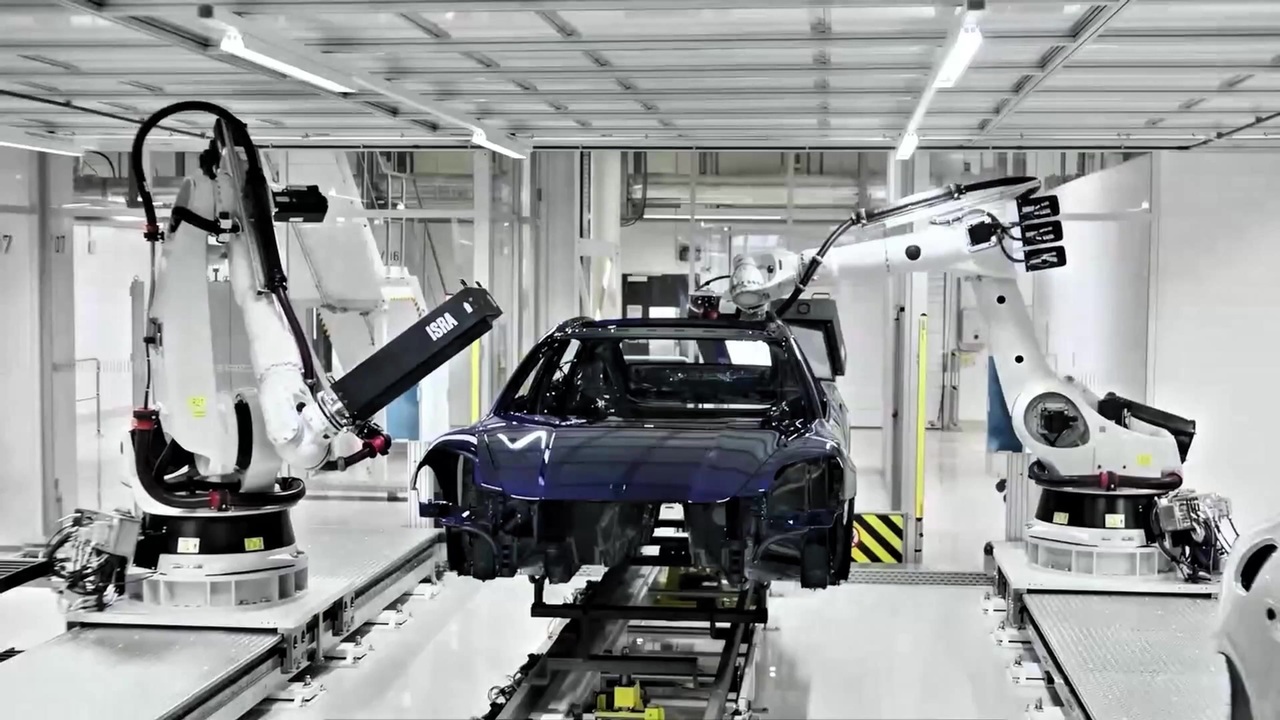
The Volkswagen Group is stepping up the pace of its transformation into the leading provider of individual mobility in the electric and fully connected age. To this end, the Group will systematically enhance its successful platform strategy. In future, vehicles and services of all Group brands are to be based on largely standardized technical foundations. The Group’s new platform roadmap has four elements: Hardware, software, batteries and charging, as well as mobility services. This is how the Volkswagen Group will reduce complexity, leverage economies of scale and synergies between brands, and generally accelerate the Group’s transformation, which has already begun. In order to secure the investments in future technologies, the Group will continue to focus its core business and strengthen its financial foundation.
Ad hoc
Volkswagen AG announces preliminary figures for the business year 2020
Press ReleaseArchive
(Updated on 04/22/2021) E-offensive gains traction: Volkswagen Group significantly reduces CO₂ fleet average in the EU
Wolfsburg, January 21, 2021 – The Volkswagen Group’s e-offensive is gaining traction: deliveries of electric models in the EU including the UK, Norway and Iceland increased more than fourfold in the year now ended to a total of 315,400 electric vehicles (2019: 72,600). The proportion of battery electric vehicles (BEVs) and plug-in-hybrids (PHEVs) in the total deliveries rose to 9.7 percent (2019: 1.7 percent). The Volkswagen Group is thus the clear market leader in the all-electric segment in Western Europe, accounting for a share of around 25 percent (2019: 14 percent). The main drivers of this development were the Volkswagen Passenger Cars and Audi brands, which overfulfilled their CO₂ fleet targets largely due to the successful start-up of their ID.3 and e-tron electric models. Based on preliminary figures, the Volkswagen Group thus reduced the average CO₂ emissions of its new passenger car fleet in the EU by around 20 percent compared with 2019 to 99.9 g/km in 2020. The emissions of Bentley and Lamborghini are measured individually, which is why they are not included in this figure. In anticipation of narrowly missing the target for the CO₂ pool established jointly with other manufacturers by around 0.8 g/km, the Group had recognized provisions at an early stage to avoid any impact on fourth-quarter earnings.
Press Release
Volkswagen Group strengthens market position in 2020 and hits the ground running in e-offensive
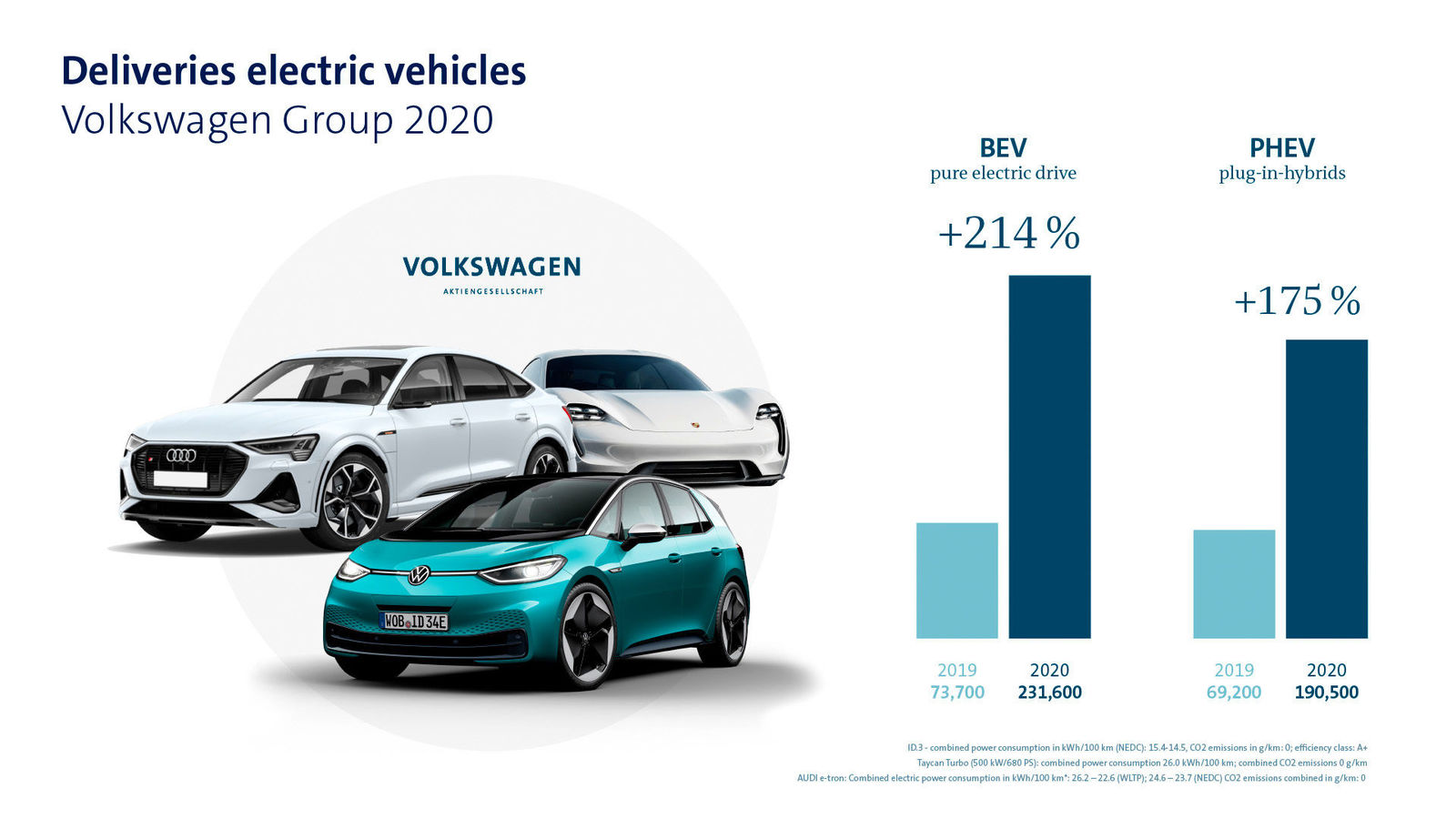
The Volkswagen Group handed over 9,305,400 vehicles to customers worldwide in 2020, a decrease of 15.2 percent year-on-year due to Covid-19. In December, deliveries were down just 3.2 percent on the same month of the previous year, while in the fourth quarter they declined by a total of 5.7 percent. This meant that the Group slightly expanded its global passenger car market share in 2020 amid a declining overall market. Despite the Covid-19 pandemic, the Group’s e-offensive with a large number of new models met with keen in-terest from customers in the year now ended and resulted in deliveries of approximately 231,600 all-electric vehicles, more than three times the volumes delivered in 2019. Plug-in hybrids were also very popular with customers, who purchased 190,500 units (+175 per-cent). In Western Europe, the share of electric vehicles therefore surged to 10.5 percent of overall deliveries (2019: 1.9 percent).
Press ReleaseArchive
Volkswagen Group raises investments in future technologies to EUR 73 billion
The Volkswagen Group is pressing ahead with its transformation into a digital mobility company. As decided in Planning Round 69, the Group will spend around EUR 73 billion on electrification, hybrid powertrains and digital technology over the next five years. This was announced following today’s Supervisory Board meeting. Investments in Capex and R&D for future technologies will be raised to 50 percent from 40 percent of the Group’s total investments of around EUR 150 billion. Investments in digitalization will double to EUR 27 billion by mid-decade, reflecting the Group’s strong focus on building up software capabilities. Approximately EUR 35 billion will be spent on battery-electric vehicles. A further approximately EUR 11 billion has been earmarked for the development of hybrid vehicles of existing models.
Press Release
Volkswagen Group returns to profitability
The Volkswagen Group’s business was heavily impacted by the Covid-19 pandemic in first nine months of 2020, but recovered noticeably in the third quarter. This means that the declines in deliveries, sales revenue and profit as of the end of September were significantly more moderate than at the half-year mark. The countermeasures initiated worldwide to cut costs, secure liquidity and decrease the funds tied up in working capital had as much of an impact as the continuing improvements in the situation in key sales markets. Deliveries to customers in the first nine months of 2020 fell by 18.7 percent year-on-year, to 6.5 (8.0) million vehicles. As a result, sales revenue, too, decreased by 16.7 percent to EUR 155.5 (186.6) billion. Thanks to a return to a clearly positive result in the third quarter, the operating result before special items amounted to EUR 2.4 (14.8) billion as of the end of September. The significant year-on-year decrease was primarily attributable to the decline in the sales volume due to the sharp fall in customer demand, especially in the second quarter. Other factors were negative effects of the fair value measurement of derivatives to which hedge accounting is not applied and exchange-rate effects. They were set against a non-cash gain on the contribution of Autonomous Intelligent Driving (AID) into the autonomous driving joint venture with Ford. Special items relating to diesel weighed on the operating profit with EUR –0.7 (–1.3) billion. Earnings before tax decreased to EUR 2.3 (14.6) billion, marking a clear return to positive territory.
Automotive Division: Net cash flow turns positive again, significant increase in net liquidity
Press Release
Volkswagen shareholders formally approve actions of Board of Management and Supervisory Board and adopt resolution on dividend for 2019
The Annual General Meeting of Volkswagen Aktiengesellschaft took place today online for the first time due to the Covid-19 pandemic. The shareholders voted by a majority of 99.98 percent to approve the recommendation of the Board of Management and the Supervisory Board to pay the same dividend as last year of 4.80 EUR per ordinary share and 4.86 EUR per preferred share for fiscal year 2019. As in 2018, approximately 2.4 billion EUR will therefore be distributed to the shareholders. The resolution on the formal approval of the members of the Board of Management and the Supervisory Board who held office in 2019 was passed by 94.33 percent of the shareholders represented at the Annual General Meeting.
Press Release
Annual General Meeting: Volkswagen confirms outlook for 2020 and underscores future investments
The Volkswagen Group today confirmed its outlook for 2020 and underscored the planned future investments despite the COVID-19 pandemic. “In both 2019 and 2020, we took significant steps towards becoming a leading provider of electric, digital mobility, achieving important milestones”, Group CEO Herbert Diess said at the virtual Annual General Meeting of Volkswagen Aktiengesellschaft. “The transformation of the Group is not being held back by corona, but accelerated by it.” The Group plans to invest €33 billion in e-mobility by 2024 and aims to become the market leader in battery-electric vehicles. A further important success factor is the new VW.OS operating system that is being developed by Car.Software.Org and will be used for the first time in Audi’s Artemis project. €14 billion alone will be invested in building IT expertise and in autonomous driving by 2024. “The fact that the car will develop into a fully networked mobility device in the next ten years will be much more far-reaching than the transformation of propulsion”, Diess said. Volkswagen expects the upward trend to continue for the remainder of the year and confirmed the outlook for a positive operating result for 2020.
Ad hoc
TRATON submits increased proposal to acquire all shares in Navistar International Corporation
Press Release
Volkswagen Group measures reduce the effects of Covid-19 in the first half of the year
Business at the Volkswagen Group and its brands was strongly affected by the Covid-19 pan-demic in the first half of 2020. Countermeasures initiated at an early stage to reduce costs and safeguard liquidity were successful and therefore reduced the effects of the crisis. Due to production consistently oriented toward customer demand, the Group achieved a strin-gent inventory management and thus a significant decrease in funds tied up in working capital. Overall, net liquidity in the Automotive Division could be risen by EUR 0.9 billion compared with the first quarter of 2020 to EUR 18.7 billion, also due to the issuance of hy-brid notes amounting to EUR 3.0 billion. Deliveries to customers fell year-on-year by 27.4 percent to 3.9 (5.4) million vehicles. As a result, sales revenue decreased by 23.2 percent to EUR 96.1 (125.2) billion. Operating result before special items amounted to EUR –0.8 (10.0) billion. The main reason for this development was lower unit sales caused by the sharp fall in customer demand. The fair value measurement of derivatives to which hedge accounting is not applied (in particular commodity hedges) and exchange rate effects of EUR –0.9 billion are virtually offset by a non-cash gain of EUR 0.8 billion on the contribu-tion of Autonomous Intelligent Driving (AID) into the autonomous driving joint venture with Ford. Special items relating to the diesel issue weighed on the operating profit with EUR –0.7 (–1.0) billion. Earnings before tax decreased to EUR – 1.4 (9.6) billion.
Press Release
Volkswagen Group’s business substantially impacted by Covid-19 pandemic in first quarter
The Volkswagen Group recorded a substantial impact on its business as a result of the global Covid-19 pandemic following the first three months of the current fiscal year. Deliveries to customers decreased by 23.0 percent compared to the same period of the previous year to 2.0 (2.6) million vehicles. Sales revenue fell by 8.3 percent from January to March to EUR 55.1 (60.0) billion. Operating profit before special items decreased significantly by 81.4 percent to EUR 0.9 (4.8) billion. In the previous year, special items as a result of the diesel crisis reduced profit by EUR –1.0 billion. There were no special items in the first quarter of 2020. The operating return on sales in the first quarter of 2020 was 1.6 percent (6.4 or 8.1 percent before special items). In addition to the fall in unit sales due to the drop in customer demand, turbulence in the commodity and capital markets caused the fair value measurement of commodity hedges to have a negative effect and also led to negative currency effects. Earnings before tax fell to EUR 0.7 (4.1) billion.
Press Release
Volkswagen AG withdraws 2020 full-year outlook due to business impacts from covid-19 pandemic
The ongoing Covid-19 pandemic has also had a significant impact on Volkswagen Group’s business. As a result, the automobile retail network has largely came to a standstill. The resulting decline in customer demand and supplier bottlenecks led to production stops within the Volkswagen Group. The aforementioned developments have a negative impact on the expected financial results of the
Volkswagen Group.
Ad hoc
Volkswagen AG announces preliminary Q1 2020 results and withdraws 2020 full-year outlook due to business impacts from covid-19 pandemic
Press Release
Volkswagen Group and its brands bring 2019 to successful conclusion
The Volkswagen Group brought fiscal year 2019 to a successful conclusion with improved financial results in almost all brands. Dr. Herbert Diess, Chairman of the Board of Management of Volkswagen Aktiengesellschaft, said, “2019 was a very successful year for the Volkswagen Group. We have laid vital groundwork for all relevant changes. 2020 is a very difficult year. The corona pandemic presents us with unknown operational and financial challenges. At the same time, there are concerns about sustained economic impacts. We will succeed in overcoming the corona crisis by pooling our strengths and with close cooperation and high morale in our Group.”