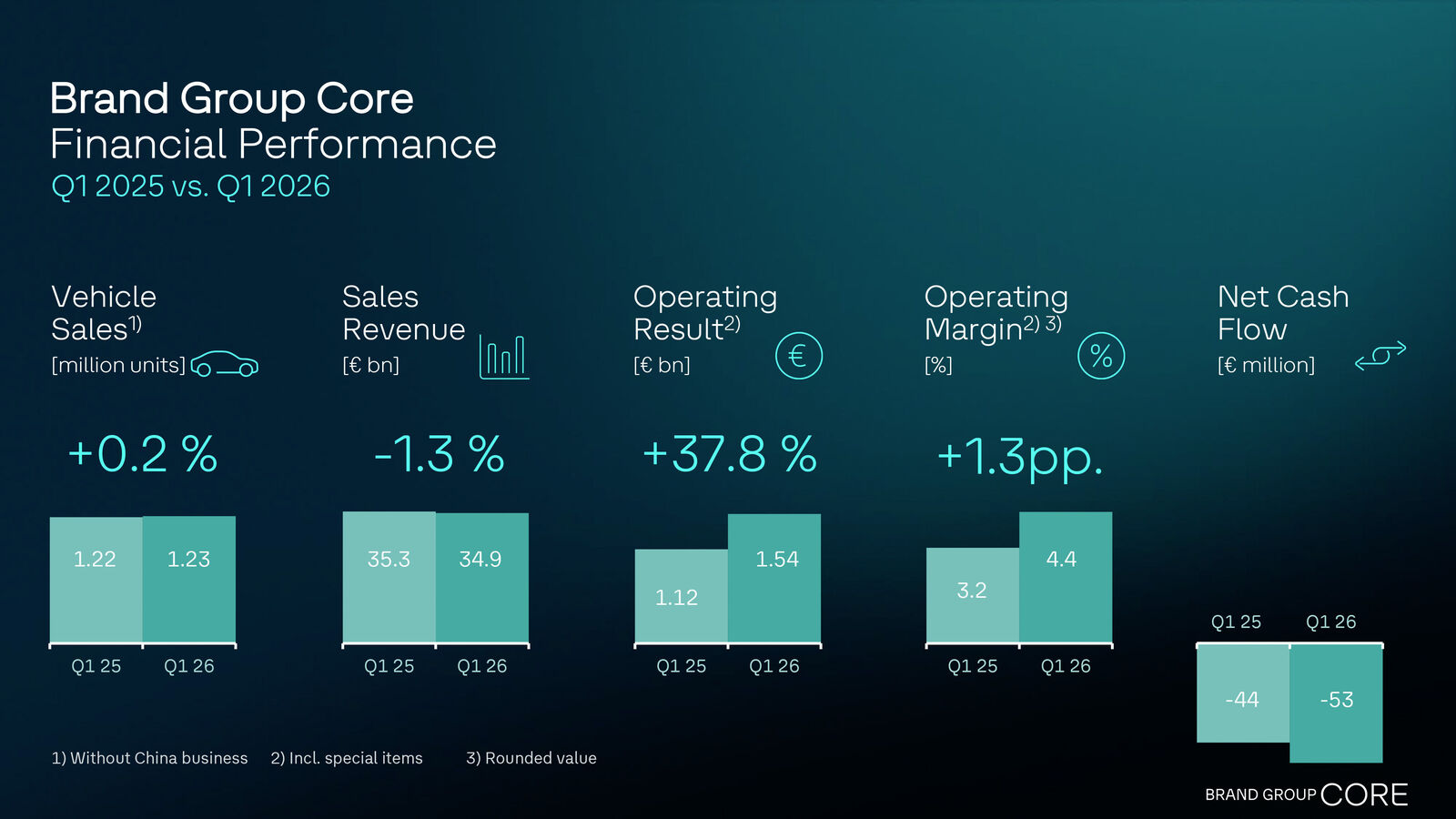
The Brand Group Core continues its approach of consistent efficiency improvement and cross-brand cooperation. The restructuring of the Brand Group Board of Management implemented in January 2026 laid the organizational groundwork for shortening decision-making paths, streamlining structures and sustainably improving the competitiveness of the Brand Group.
With the launch of the Electric Urban Car Family in 2026, the Brand Group Core will be launching four electric models in the compact segment. Under the project management of SEAT/CUPRA, two models of the Volkswagen brand and one model each of CUPRA and Škoda are being created at the Spanish sites in Martorell and Pamplona.
Although these models have been developed jointly, their design, positioning and customer appeal are clearly differentiated. The models show that upscaling does not mean compromise but rather affordable e-mobility and a strong brand presentation. Across the entire product life cycle, the Electric Urban Car Family will leverage synergy potential of 650 million euros.
Volkswagen Passenger Cars is approaching the launch of the broadest electric model portfolio in the history of the brand. In 2026, we will see the world premiere of the
ID. Polo1, ID. Polo GTI2, ID. Cross3 and the ID.3 GTI4 - and thus complement the recently introduced ID.3 Neo5. Especially the ID. Polo will break new ground as regards affordable e-mobility in the compact segment. All the models are based on the latest stage of development of the Modular Electric Drive Toolkit, the MEB+, a technology previously reserved for larger vehicle classes, which will now be available for the first time in the small car class. The model offensive as a whole represents the strategic reorientation of the brand: quality, value and technical expertise lay the foundation for the democratization of e-mobility.
In the USA, Volkswagen has discontinued local production of the electric ID.4.
Instead, the Chattanooga plant will focus on high-volume internal combustion engine models such as the Volkswagen Atlas. The resulting costs in the amount of 0,5 billion euros reflect the adjustment of the local product strategy to changed market conditions.
At the same time, the business model of the Volkswagen Group is being realigned.
The new vision for 2030 takes up the current challenges resulting from a rapidly changing environment. The product portfolio will be further streamlined, as will structures and processes. The focus is on those platforms and technologies that will make a perceptible difference for the customer. In addition, responsibilities at all levels need to be even more clearly defined. Clear competences for the Group, brands and regions will make decisions faster and more reliable. Resources will be channeled in a disciplined way to areas where competitiveness and added customer value can be created.