


Date: 27.08.2026
Future Plan: Volkswagen Group is Entering the Next Phase of Transformation

On this page, you can find the latest information on the future plan of the Volkswagen Group. The page will be updated as needed.
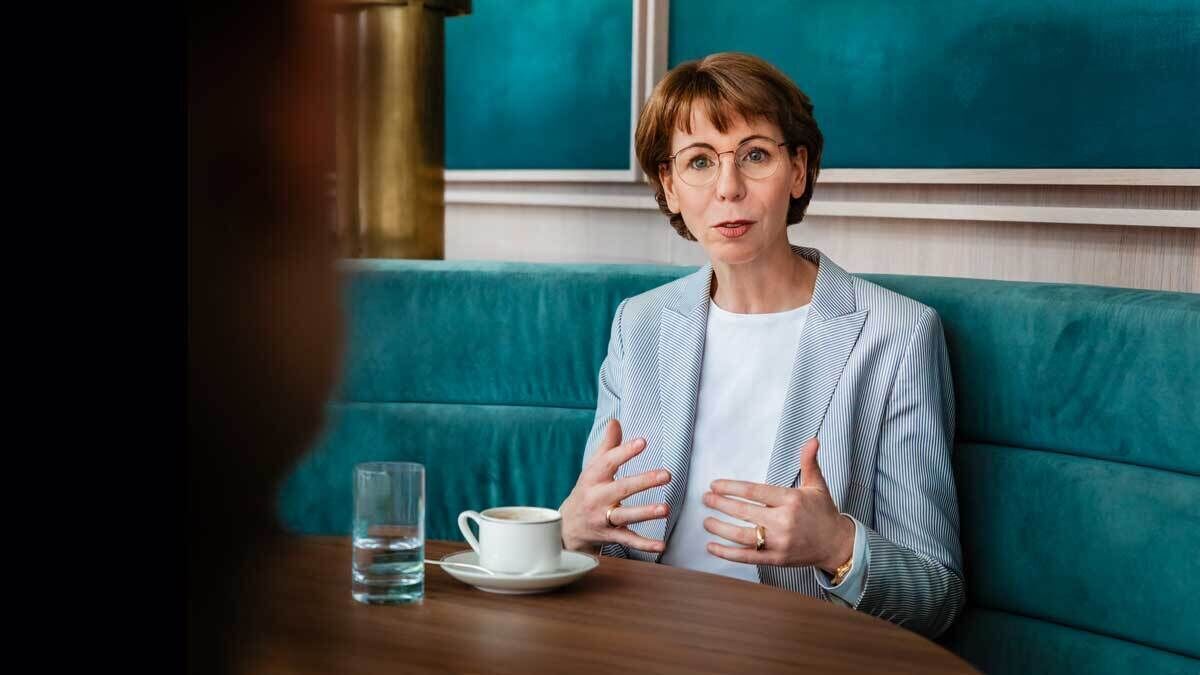
Hauke Stars, Member of the Group Executive Board responsible for IT, is leading the review of the strategic relevance of the Volkswagen Group’s existing equity stakes as part of the Group Target Picture 2030. In this interview, she explains the principles guiding that process and how the Volkswagen Group is reorganizing its investment portfolio.
Date: 27.08.2026
The Volkswagen Group’s investment portfolio encompasses all companies and holdings of the Volkswagen Group. That amounts to more than 2,000 entities worldwide – a large number. There are companies that we own outright; in others, we hold shares. The spectrum is very broad and extends well beyond our core business: financial services, real estate, IT companies, start-ups, but also involvement in sport and culture. The portfolio has grown substantially over the years.
What was right and sensible a few years ago is worth questioning today. The world is changing, and so is our strategy and what we need within the Group to position our core business well for the future. The investment portfolio built up over the years has not always evolved as dynamically as our market conditions and strategic direction. If an equity stake no longer supports our core business optimally today, we can either deploy those resources differently or enable such a business to grow better with new partners than it could within the Group.
An equity stake that does not fit optimally into the Group ties up capital and management capacity that we urgently need elsewhere. You see this very clearly in day-to-day operations: those responsible spend a great deal of time in committee meetings dealing with equity stakes that have little to do with our core business. And the capital markets view the capital commitment, complexity and costs associated with the portfolio as a disadvantage.
We therefore need to reduce our equity stakes and want to refocus on our core business: developing, producing and selling top-class vehicles and offering the associated services. That is exactly where we are directing our resources.
If at the same time, as a shareholder, we also do our best to develop these equity stakes further – for instance, with new partners – that is a win-win situation: for the Group, for the entity itself and for its employees and customers.
We follow a clear guiding principle and the underlying logic is straightforward: the Group does not need to own everything and does not need to manage every equity stake itself.
The portfolio review is structured around four core questions:
If at least one of these questions can be answered with a clear “yes”, the equity stake remains with us for the time being. Otherwise, we initiate a strategic process to identify value-maximizing alternatives.
Ideally, there are investors who can develop an equity stake further than we can within the Group. Everllence is a very good example of this: following its repositioning, the company is in good shape today and has strong growth prospects. A new partner can provide the capital required for this just as well as we can.
Nor is the objective to sell or divest everything indiscriminately. On the contrary: for a number of equity stakes, we want to remain actively engaged but optimize the structure and our capital commitment by reducing our shares and thereby lower administrative costs and interest charges. Where that is also not feasible, we examine, for example, a consolidation – that is, whether tasks can be brought together under one single entity. Dissolution is always the last resort.
Depending on the scope and significance of the decision, we involve the relevant governing bodies – up to and including the Group Executive Board and, where required, also the Supervisory Board.
New stakes will not be the exception, but they must be justified on strategic and financial grounds. We do not need to hold a stake in a company to work with it. Partnerships are often much more flexible – especially in areas that are evolving at a rapid pace. Access to technology can also frequently be secured through development partnerships or long-term contracts, without our having to be a shareholder. And this is already the path we are taking. Ownership, by contrast, means capital deployment and management effort. And where that capital deployment and our management effort do not add decisive value, they tie up resources that could be put to better use elsewhere.
The goal is a focused, transparent and well-managed portfolio – one that concentrates capital and management capacity on the activities that are genuinely necessary for our core business. A lean portfolio gives us strength and flexibility; it also helps us keep sight of what matters. We have set ourselves the target of streamlining the equity stakes by around one third. However, there is no exact stipulation as to how many equity stakes will ultimately remain within the Group. What matters is the individual strategic classification of each equity stake, not an across-the-board quota.
For key areas, the Group Executive Board has already made decisions. The core business – everything directly necessary for the development, production and sale of our vehicles – will remain with us.
At the same time, for a number of equity stakes, we have clearly established that they are better placed in other hands. Everllence is one example; Bugatti Rimac at Porsche is another. Our ongoing M&A processes have priority; after that, we assess case by case which businesses are ready for a new strategy or a new ownership structure. Some entities first need to be restructured before a sale at an attractive price becomes possible, and then it is a matter of finding a suitable buyer who is willing to pay that price. Therefore, an exact timeline cannot always be predicted.
On further ongoing negotiations, I – and we – cannot say more today. In any case, we will inform all those involved in good time and in a transparent manner. That is important to us.
I fully understand that. We take the concerns of our employees in the entities and in the Group seriously. With Everllence, for instance, we ensured through the new ownership structure that the company can continue its growth course in the dynamic markets of global shipping, data centers and the energy sector. That gives all stakeholders security – employees, customers and suppliers alike.
We remain committed to making the right decisions transparently, after weighing all options. We will not be driven by speculation. If the situation changes, we will inform all those involved in good time.
That is an important question and lies at the heart of the review. We do not just look at potential sale proceeds. We also care about know-how, customer relationships, financing effects and long-term dependencies. Taking all of that into account requires time. And we are taking this time. As I said, we will not let ourselves be driven by media speculation.
For each equity stake, there is a business owner who takes responsibility for this assessment. For many equity stakes, that responsibility lies with the Group brands or with CARIAD. This work proceeds one entity at a time. It is just as thorough as it is demanding. But only in this way do we ensure that we genuinely retain what makes us strong.
We have set ourselves the target of reducing our equity stakes by around one third by the end of 2030. The team has laid the groundwork for this over the past months. We have put in place a structure that supports this process. The focus now is on implementation.
On this page, you can find the latest information on the future plan of the Volkswagen Group. The page will be updated as needed.
