


Date: 08/31/2026
Future Plan: Volkswagen Group is Entering the Next Phase of Transformation

On this page, you can find the latest information on the future plan of the Volkswagen Group.
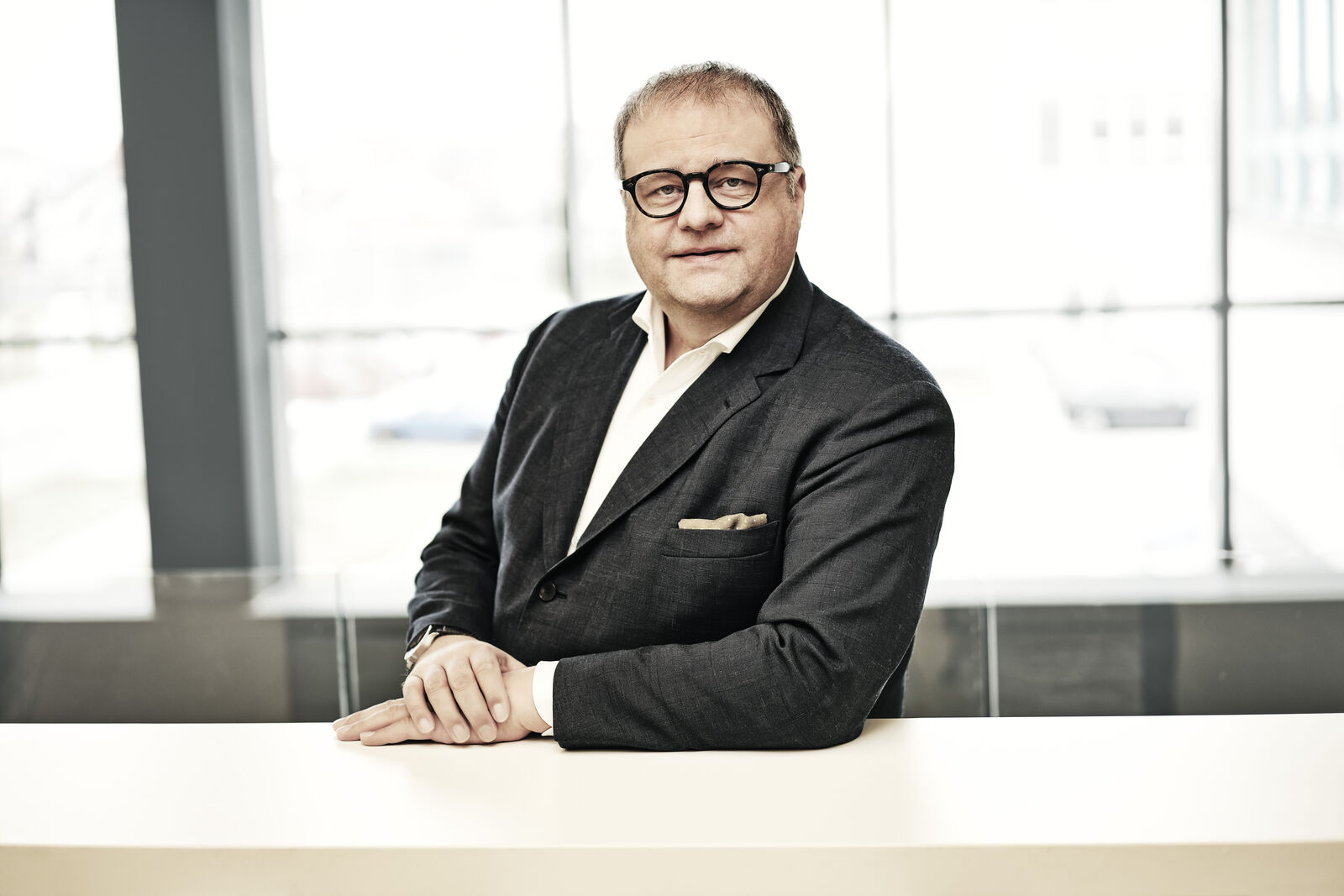
How can Volkswagen cut costs, strengthen supply chains and accelerate innovation at the same time? In this interview, Karsten Schnake, Board Member for Procurement at the Volkswagen brand, explains how economies of scale, reduced complexity, value engineering and strategic partnerships are driving the transformation and competitiveness of the Volkswagen Group.
Date: 08/31/2026
The pressure on the industry is tremendous, and we have to make sure our key suppliers remain financially healthy. If an important supplier gets into financial trouble, we can quickly lose the ability to build cars – supply disruptions, production stops or last-minute re-sourcing are extremely expensive. We cannot achieve competitiveness simply by shifting costs to suppliers. Where necessary, we need to support them temporarily, but every company ultimately needs a sustainable business model.
At the same time, there is clearly room for further savings. And it is our responsibility to deliver them. Procurement is responsible for the largest share of the Group's external costs and therefore has a significant impact on competitiveness. We need to make that contribution and act as an enabler of the transformation. That is why we are setting clear, ambitious yet realistic targets across the different brand groups, platforms and technologies, discussing smart solutions with our suppliers in a partnership-based way and focusing on opportunities in both technical and commercial areas.
Not at the end when we negotiate prices, but right at the beginning when we shape the product. Historically, much of the cost optimisation happened after technical concepts had already been defined. That reduced our space for negotiations and often brought unexpected costs, as there simply wasn’t any other solution. That changes now – we are implementing the Group-wide Corporate Cost Committee, where Procurement, Engineering, Finance and Sales make cost decisions together already in the concept phase at Board level.
The involvement of these areas is important for creating the smart concepts we need, clearly focused on customer needs. That is further supported by greater use of value engineering. Our aim is to identify and eliminate unnecessary costs without compromising functionality or quality. We also look closely at the competition to identify best practices and improve our own efficiency. At the same time, we need to understand even better what our customers actually want and are willing to pay for. This way, we put our money where it creates the highest value and deliver the right product at a cost that allows us to earn a competitive return.
Key levers are in-target product development and faster data-driven decision-making. At the same time, we systematically leverage the scale of the Group: if one brand identifies a more competitive solution, we assess how this can be applied across brands and platforms.
When we bundle volumes under the same technical concept across platforms and scale the platforms across brands, we involve suppliers early, and give them greater planning certainty. That makes it easier for them to invest in technology, production capacity and innovation because they know they have a long-term business with Volkswagen Group and will make money. In simple terms, economies of scale benefit both sides: suppliers become more efficient, and we get better costs. A good example is the Electric Urban Car Family – we have built a competitive supplier network in Spain and while the four cars produced there share majority of components, each of them is unique and true to its brand.
First and foremost, we have to look critically at the complexity we have created ourselves in our products, our requirements, processes and our supplier landscape. In many cases, different brands still use different specifications for essentially the same requirement. Where possible, we need to harmonize those standards. The same is true for complexity in our product portfolio.
For example, at the moment, we offer over 2,300 variants of seats. If we reduce the number to around 100 – which is our goal – we can use the same parts more often, buy larger volumes, stabilise and optimise production flow in our suppliers’ factories and simply have fewer different parts to manage. Even relatively small reductions in complexity can create significant savings if applied across the Group. And we have clear feedback from our customers – they want simplicity. We have to listen and deliver quickly.
The supplier landscape is part of the difference, but it cannot be reduced to suppliers simply being cheaper. Chinese manufacturers operate in a different environment, with different sourcing conditions, regulatory and cost frameworks. The state plays a strong role in supporting strategic industries and technologies, alongside access to important raw materials and other critical inputs. These are structural advantages that we need to understand when comparing cost positions. In short: Chinese competitors are not better at cost work than us, but their cost conditions are fundamentally different.
For us, that means we need to continuously benchmark our sourcing approaches globally and evaluate where alternative sourcing models and supplier ecosystems can make us more competitive. But we also have to be honest: this is not something Procurement or the Group can solve alone. If Europe wants to remain competitive, it needs to find its own response. We need a clear European framework, fair competitive conditions and less unnecessary bureaucracy and regulation that does not reflect market realities. That would not only lessen the burden on us and our suppliers, but also create an attractive environment for future investments and faster innovation.
Resilience is a key part of competitiveness. With around 63,000 direct supplier sites worldwide, we focus on much greater transparency across our supply chain and advanced risk management, supported by digital tools and data. That includes the newly established Supply Chain Control Center in Prague – an early warning system developed by us to avoid disruptions at our suppliers’ locations.
But geopolitical uncertainties, material shortages and other disruptions will continue to occur. Managing crises is now part of our daily business, and we need an organisation that can adapt to whatever comes next.
That also means rethinking our supplier base. In some areas, we are moving beyond the traditional Tier 1 model, where we have so far mainly worked with direct suppliers. We have already done this with semiconductors and are now exploring other areas, including raw materials. This can deliver both cost advantages and greater security of supply.
Pushing costs down is only one side of the equation – the other is working with the right partners and developing the right business case together. Procurement is now one of the main decision-makers when selecting technologies, defining the right cooperation models and establishing contractual frameworks that secure competitive conditions for both sides over the long term. Then we help integrate and scale successful solutions across the Group at much greater speed. In that sense, Procurement is becoming a much stronger enabler of innovation and technology transfer.
A good example is our cooperation with Rivian. We are not simply buying a technology from them; we are combining their software and electrical-architecture expertise with our scale and negotiating know-how and jointly sourcing components for the Rivian and Volkswagen Group Technologies joint venture. That helps us bring the technology to our vehicles faster while also improving our cost position.
We need to make bold decisions faster and closer to the business, and use data and digital tools much better. But transformation starts with a mindset and culture change – we must challenge processes when they get in the way and focus on what creates real impact. Every buyer has to know their part in every detail, taking much more ownership and spend each euro as if it were their own. And we need to work much more across brands, always looking for the best solution for the Group as a whole. If we do that, we will remain the best Procurement organisation in cost management.
On this page, you can find the latest information on the future plan of the Volkswagen Group.
