




In the company’s view, the collective bargaining talks also have to address additional socially responsible workforce measures, including the establishment of transfer companies eligible for public funding. Employees can join these companies to explore new opportunities in the labor market. Despite the challenging and strained situation, the company remains committed to the collective bargaining agreement for the future, including its job security provisions.
Against the backdrop of significantly deteriorated economic conditions, both the company and IG Metall invoked the reopener clause in September. The collective bargaining agreement for the future expressly provides for this process, giving both parties the opportunity to discuss adjustments. Volkswagen AG focuses on solutions that ensure economic stability while at the same time providing a reliable perspective for employees. At the end of September, Volkswagen AG additionally gave notice to terminate ten collective agreements in accordance with the applicable notice periods. This created a framework for negotiations to agree on the cost savings required to improve competitiveness.
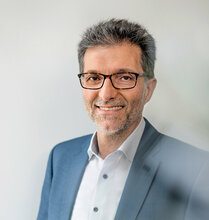
Arne Meiswinkel, Chief Human Resources Officer of the Volkswagen brand and member of Volkswagen Group’s Extended Executive Board, said: “We have no time to lose. The economic situation has deteriorated dramatically since the collective bargaining agreement for the future was concluded in 2024. This creates an urgent need for action. We have to future-proof Volkswagen AG. Only an economically successful company can provide secure jobs over the long term. We need to discuss competitive labor costs, a willingness to embrace change and more flexible workforce deployment. In this situation, our employees rightly expect swift clarity and, above all, viable solutions. For this reason, we welcome the start of negotiations now.”
In the “Zukunft Volkswagen” agreement of December 2024, Volkswagen AG and IG Metall had already committed to a socially responsible reduction of more than 35,000 jobs at Volkswagen’s German sites by 2030. The Group Target Picture 2030 provides for an additional reduction of 12,000 positions at Volkswagen AG by 2030.
This is also to be achieved through socially responsible means. Further measures are needed to ensure the company can continue to act within this framework. From the company’s perspective, these include:
- the maximum use of voluntary departure options.
- the establishment of transfer companies eligible for public funding as an additional measure. Employees can join these companies to open up new prospects in the labor market, for example by gaining additional qualifications. The company’s aim is to manage these changes in a way that gives employees prospects, choices and support for their next steps.
- a reduction in labor costs.
The specific details of these measures will be the subject of the negotiations now agreed with IG Metall.
Furthermore, it remains the case that, by mid-2027, in line with the outcome of the Supervisory Board meeting of September 3, 2026, a concept compatible with the Target Picture for a sustainable and competitive European production structure will be developed.
This step is part of the Volkswagen Group’s Future Plan 2030. The far-reaching transformation program sets out a course of action for the Group and its subsidiaries to adapt to changing conditions in the automotive industry. At its core are a leaner product portfolio firmly focused on customers and markets, and an organization realigned accordingly. The “Operational Excellence” initiative aims to reduce costs along the entire value chain by around EUR 20 billion by 2030. An additional reduction in overhead costs of around EUR 11 billion is planned. Competitive labor and personnel costs are also an important lever for achieving the objectives of the Future Plan 2030.