


Future Plan: Volkswagen Group is Entering the Next Phase of Transformation

On this page, you can find the latest information on the future plan of the Volkswagen Group. The page will be updated as needed.
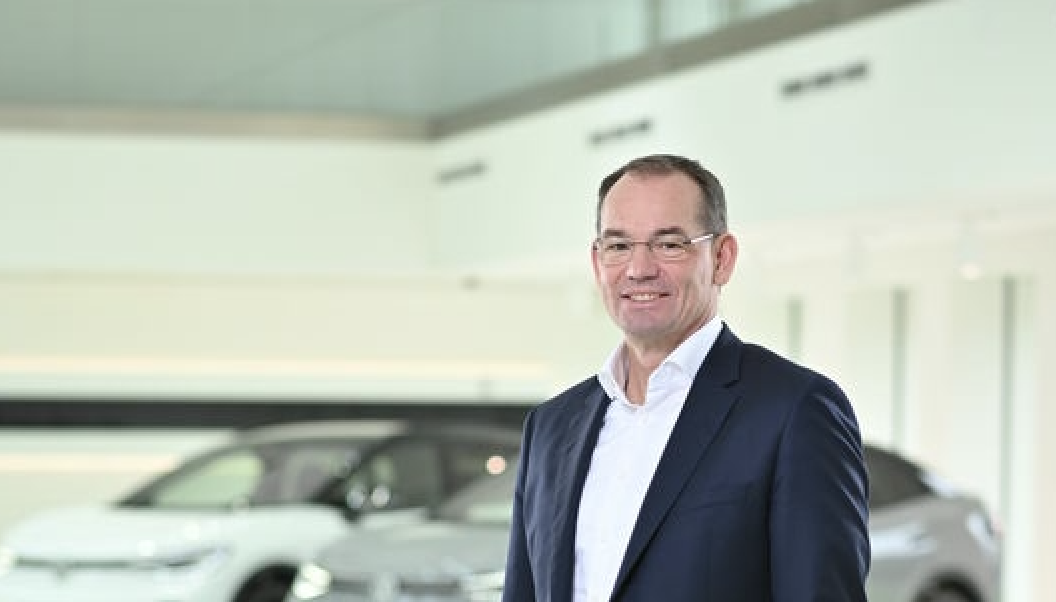
Christian Vollmer, Member of the Board of Management for Production and Logistics, explains how the Volkswagen Group is realigning its production network.
A plant’s capacity describes how many vehicles could be produced there under ideal conditions. Taking Wolfsburg as an example: if all four lines were running at full capacity in a three-shift system, its technical capacity would be around 900,000 vehicles per year.
That is correct – and it clearly illustrates the fundamental issue. We can only build as many vehicles in our plants as the market can absorb. In Europe alone, the annual vehicle market has contracted by around two million units compared with the pre-Covid period – and as the market’s leader, we are feeling the impact. In addition, we are exporting fewer and fewer vehicles built in Europe to the US and China, because tariffs have made them more expensive in those markets. As a result, a significant share of capacity in our factories remains unused.
Lower capacity utilisation means that fixed costs are spread across fewer vehicles. As a result, production becomes structurally more expensive – both overall and for each individual vehicle produced. It is not economically sustainable to maintain capacity that we can no longer fully utilise on a long-term basis. Across the Group, we are aligning our future operations with market-based demand of around nine million vehicles per year. Before the Covid pandemic, our production was designed for twelve million units, based at the time on significantly more optimistic assumptions. Over the past two years, we have already reduced overcapacity by two million units worldwide. And in China we have already reduced capacity by one million units, while a further one million units are covered by the future packages agreed for the Audi and Volkswagen brands in 2024, as well as adjustments already implemented in recent years, for example in Ingolstadt and Neckarsulm. A further reduction of 500,000 units in China has been initiated. The next steps in Europe and Germany will follow on a similar scale.
In addition to a number of operational adjustments, such as reducing shifts, we have already begun to take structural countermeasures. As already mentioned, for the Volkswagen and Audi brands alone, we have removed – or are currently removing – a total of one million vehicles from the system. This includes the shutdown of individual production lines, for example in Zwickau and Wolfsburg, as well as the repurposing or closure of entire sites, such as the Gläserne Manufaktur in Dresden or the Audi plant in Brussels. In Osnabrück, too, vehicle production will be phased out next year, as already agreed in 2024, and we are examining alternative uses for the plant. Measures of this kind have a lasting effect because they permanently lower our cost base. To remain competitive, we must continue to reduce our overcapacity consistently in the coming years – and make the best possible use of existing capacity across brands.
Together with Group Finance, we assess what is best for the Group – independently of the interests of individual brands. The factory costs of the respective sites play a central role, as they were also a key component of the agreement reached at the end of 2024. Our German sites have made enormous progress in this regard over the past two years. For example, the vehicle-producing plants with clearly defined targets reduced their factory costs by more than 20 per cent in 2025. But that does not change the fact that, compared with our plants in Eastern and Southern Europe, these sites are still significantly too expensive. This is also linked to different framework conditions, such as energy prices and labour costs. Our goal must be to ensure that the most cost-efficient, and therefore most competitive, plants are utilised as fully as possible in the coming years. The decision on where and from when a particular model will be produced is made by the Group Board of Management as part of the Planning Round, which is approved by the Supervisory Board.
That is an important factor. The best example of our successful multi-brand strategy is our plant in Bratislava, where we produce models from Audi, Porsche, Škoda and Volkswagen – at a lower cost than it would be possible at any other site. Bratislava sets the benchmark for creating cross-brand synergies. We have recently embarked on a similar path within the Brand Group Core in Spain, where our two plants in Martorell and Pamplona are producing four models of the Electric Urban Car Family from three brands, all based on the same platform. This creates significant economies of scale within the Brand Group Core. Production on the Iberian Peninsula is what enables us to offer our customers entry-level electric models at affordable prices in the first place. At many other plants, particularly in Germany, this would not be possible today, given the current cost structure.
The end of vehicle production does not automatically mean the end of a site. Rather, it creates the opportunity to develop new usage prospects at an early stage. Our ambition is to find alternatives for affected sites – as we are currently doing in Osnabrück, where we are in advanced talks with companies from the defence industry, as already known. At this point, however, it is important for me to emphasise that capacity adjustments are only one part of the realignment of our production network.
We want to adapt our industrial base to the changed market conditions. In doing so, we are creating a leaner and more efficient production network that makes better use of synergies and consistently increases capacity utilisation. This will allow us to significantly lower our break-even point – in other words, the point from which we start to generate profit – and thereby strengthen our competitiveness in a sustainable way. At the same time, we are creating the conditions to bring new products to the market faster, more cost-effectively and with a higher return on capital. It is crucial that, going forward, we direct our investments and resources even more strategically toward areas where they deliver the greatest customer value and make the greatest economic contribution. In this way, we will increase our profitability and create the basis for sustainable, profitable growth – even in a challenging market environment.
On this page, you can find the latest information on the future plan of the Volkswagen Group. The page will be updated as needed.
