


Date: 09/18/2026
Future Plan: Volkswagen Group is Entering the Next Phase of Transformation

On this page, you can find the latest information on the future plan of the Volkswagen Group.
Why is the Volkswagen Group lowering its outlook for fiscal year 2026? In this interview, Arno Antlitz, the Group’s CFO and COO, explains the reasons behind the revised operating return on sales forecast, the pressure on international automotive markets, special effects impacting operating profit, and the significance of the future roadmap, “Group Target Picture 2030.” His message is clear: the Volkswagen Group must reduce complexity, lower costs, and accelerate its transformation with determination.
Date: 09/18/2026
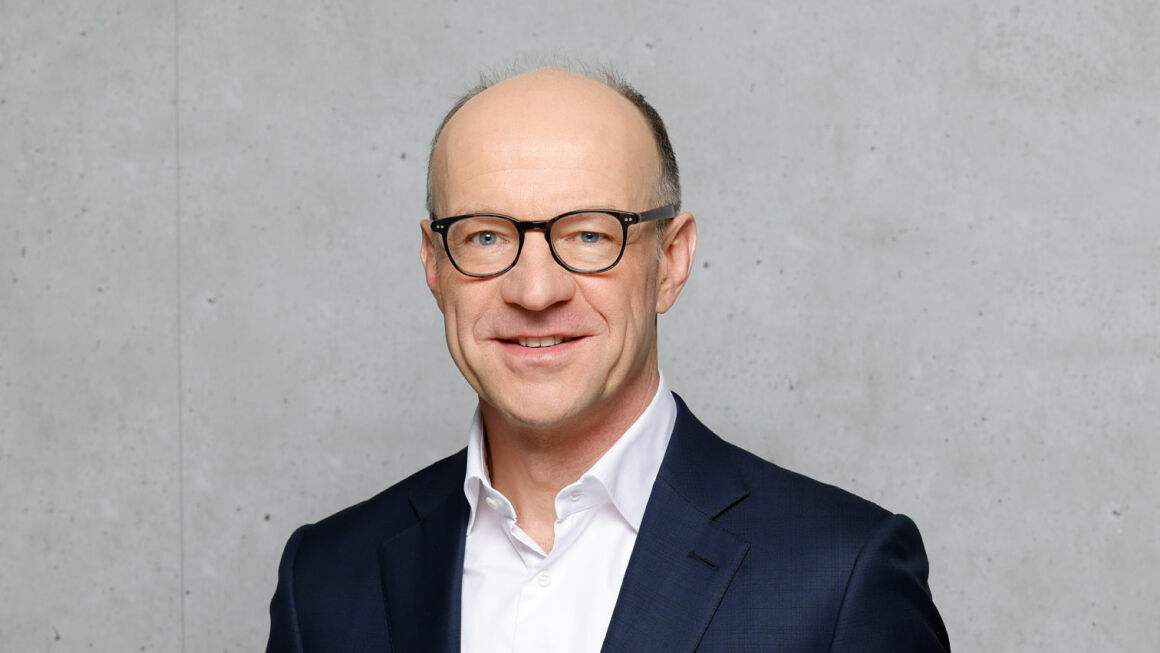
Mr. Antlitz, during the presentation of the six-month results at the end of July, the outlook was still confirmed that the return on sales for the full year would be in the range of 4–5.5 percent. Now, a return on sales of up to one percent is expected. Why has the full-year outlook now had to be revised downward? How did this come about?
In a challenging economic environment, we are working intensively to position the Volkswagen Group for the future. However, several factors have now converged. First, the situation on global markets has deteriorated further—particularly in China. The world’s largest single market has slumped by 20 percent. There are no signs of recovery on the horizon. We cannot escape this trend. At the same time, Chinese manufacturers are flooding the European market with their low-cost exports. This is increasing price and competitive pressure in this region as well. In addition, demand for battery-electric vehicles has accelerated—partly due to the geopolitical situation and sharply rising gasoline prices—and we currently earn significantly less from these vehicles than from internal combustion engines. We are taking decisive action to counter this with our product offensive. In China, we have set an important groundwork with our “In China for China” strategy and locally developed electric models. However, this strategy will not pay off fully until the coming years.
In addition to these strong headwinds in the market, which are affecting the operating profit of our brands, we are having to cope with significant one-time special effects. These will weigh on operating profit by a total of €10 billion this fiscal year, €9 billion of which will occur in the second half of the year alone. That is a massive figure.
Can you elaborate on that?
A large portion—around €6 billion—results from the non-cash impairment on the goodwill related to Porsche AG recognized in the Volkswagen Group’s financial statements. At its Supervisory Board meeting today, Porsche approved the updated medium- and long-term planning and informed Volkswagen AG of the expected development of its key financial data. The Volkswagen Group took this as an opportunity to test goodwill for impairment. In doing so, the Volkswagen Group updated its medium- and long-term assumptions, including, inter alia, in the context of the medium-term range of 10 to 15 percent communicated by Porsche. In addition, there are further charges totaling approximately €2 billion. This amount includes three effects: a planned expansion of early retirement programs, the envisaged sale of Volkswagen Osnabrück GmbH in connection with the “Future of Volkswagen” agreement reached at the end of 2024, and impairment charges on assets of fully consolidated companies in China. Adjusted for these one-time effects, the operating return on sales for the full year 2026 would amount to approximately 4 percent. This means that, on an adjusted basis, we are roughly at the lower end of our original forecast range of 4.0 to 5.5 percent. But even that is not enough to enable us to invest vigorously in the future.
Does this mean that the ongoing performance programs and the numerous initiatives to improve the cost base are not working?
No. We have made measurable progress. We are bringing exciting products to market and reducing overhead costs and capital expenditure without compromising product quality. And we continue to expect robust net cash flow of €3 to €6 billion for the full year. Net liquidity in the Automobiles Division is also expected to remain at a solid level, at €32 to €34 billion. My thanks go to all our employees for their hard work. You are already making an important contribution.
But current developments show that we must not let quite the contrary. Market changes are far-reaching and lasting. The jointly agreed “Group Target Picture 2030” strategy creates the conditions to position the Volkswagen Group and its brands to be more efficient, more competitive, and more future-oriented. A key lever in this effort is reducing complexity: a clearer product portfolio, simpler processes, and leaner structures. In this way, we are consistently focusing our resources on the areas that will secure our future. The strategic plan sets the direction. The measures outlined in it must now be implemented quickly and consistently. Our financial performance shows that we have no time to lose.
Read the latest ad hoc announcement from the Volkswagen Group here: Volkswagen AG updates its forecast for fiscal year 2026
On this page, you can find the latest information on the future plan of the Volkswagen Group.
