Financial framework and investments
As market conditions evolve, the Volkswagen Group plans with a financial framework geared towards annual sales of nine million vehicles. By 2030, the primary financial target is an operating margin of nine percent. This is at the center of its financial ambition of 8 to 10 percent and corresponds to an operating result of approximately €31 billion. A target of €37 billion has been stated for overhead costs – general expenses that cannot be allocated to a specific product.
For capital expenditure and research and development, the Future Plan provides for a target of €135 billion in the planning period 2027 to 2031. Based on the Future Plan, the individual items of capital expenditure as well as research and development costs will be presented to the Supervisory Board again for decision, in a validated and detailed form in the course of Planning Round 75.
Focus on a compelling model portfolio and reduced offering complexity
By 2035, the Volkswagen Group will streamline its model portfolio by around 50 percent and align it even more closely with changing customer expectations in different world regions. This means fewer overlaps between segments, no duplicate structures and less effort – enabling higher volumes per model with higher margins.
Following the same principle, offering complexity will be reduced by around 75 percent. This leads to significantly more targeted investments in better offering packages for customers.
The Volkswagen Group is systematically tailoring its platforms, electronic architectures, driver assistance systems and software to the needs of both the Western and Eastern hemispheres. In doing so, there is a clear assignment of what the Group develops in-house, what it advances together with partners and which services it sources externally. The goal is to scale leading technologies and reduce complexity.
Technology paths: Optimally serving the western and eastern world regions
The central technology fields – platforms, hardware modules, electronics architectures, software applications, and driver assistance systems – are being aligned with the ecosystems and requirements of the western and eastern world regions. With a clear division of roles between strategically relevant proprietary core technologies, development partnerships, and acquisitions. With the goal of developing and scaling superior leading-edge technologies. In doing so, the complexity of the technology map is being significantly reduced – with the parallel approach of better leveraging synergies within the Group-wide development network and avoiding duplicate work.
Production network: Strengthening the future through a competitive network
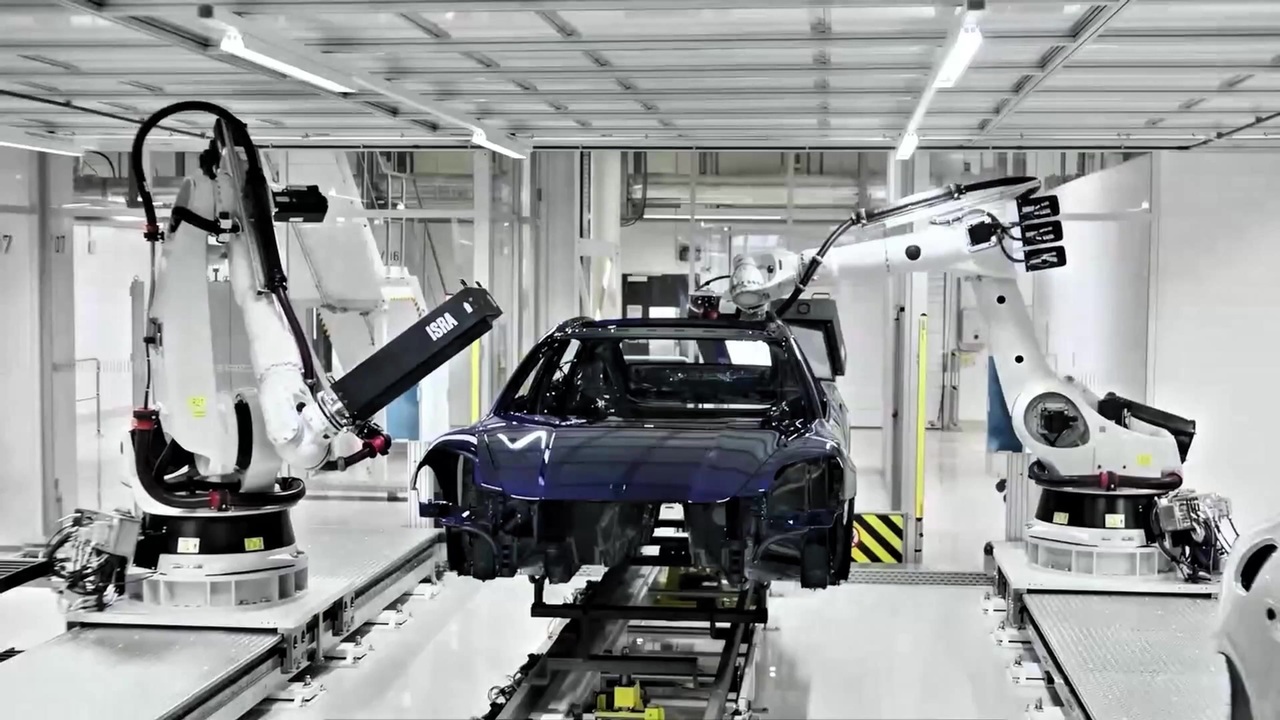
The changed market environment requires adjustments to production capacities. The over-invested production network of more than 12 million vehicles per year has already been adjusted by 2 million units over the past two years. To achieve a capacity oriented toward market demand, a further 500,000 vehicles per year each need to be reduced in China and in Europe. At the same time, the aim is to increase economic efficiency in the European network by around EUR 1.5 billion per year. Building on this, the concept resolution of the Future Plan 2030 sets out the mandate to develop, by the end of June 2027, a concept for a sustainable and competitive European production structure. For the Emden, Zwickau, Hannover, and Neckarsulm plants, no competitive follow-on utilization – staggered from 2031 to 2034 – can be guaranteed under the current planning. In this context, alternative usage options are additionally being examined in order to develop viable prospects for the sites at an early stage.
Operational Excellence program
A group-wide Operational Excellence program pools the capabilities of research and development, procurement, production, quality and sales. At the same time, it reduces overhead costs. The program targets smoother processes, greater speed and a measurable boost in competitiveness.
Leaner leadership, faster decisions
Leaner leadership structures, clear accountability and shorter lines of decision making are intended to empower teams to act faster and take greater ownership. In addition, a unified performance and bonus system is planned for executives, placing a stronger focus on individual results and collective performance.
Competitive production structure in Europe
For the European plants, a concept for a sustainable and competitive production structure is to be developed by the end of June 2027. The Supervisory Board has acknowledged that Volkswagen Group’s European capacity currently exceeds demand by 500,000 units. In addition, a competitive future production allocation for the Emden, Zwickau, Hanover and Neckarsulm plants cannot currently be secured on a staggered basis from 2031 to 2034. In parallel, alternative uses for these plants are being assessed.
Adjustment of global workforce capacities
The Future Plan requires a consistent alignment of global workforce capacity with economic reality beyond existing programs. The underlying analysis provides for a Group-wide workforce adjustment of approximately 50,000 positions, including management roles. Only in this way can the Volkswagen Group achieve its transformation targets and safeguard its competitiveness given intensifying global competition, shifting demand and technological change in the automotive industry.
Regional competitiveness and growth
In North America, the Volkswagen Group will focus on the most profitable segments. The China business is to be adapted to revised expectations for overall growth in the Chinese automotive market. At the same time, the Group plans to expand its export business toward the “Global South,” including market regions such as Asia, Australia, the Middle East, Africa and South America.
Simpler Group structure
The Supervisory Board has asked the Executive Board to develop a model for an evolved decision-making and group structure for the Volkswagen Group. This is intended to:
- provide the basis for realizing technological and other synergies that reduce costs across the Group.
- enable clear assignment of accountability.
- enable faster, more efficient, modern group governance.
The Supervisory Board will resolve to limit its reserved approval rights to measures of material significance for the Group as a whole, and adjust the corresponding thresholds to align with standard DAX practice.
Focus on the automotive core business
The Volkswagen Group is aligning its portfolio of shareholdings and businesses more consistently with its strategic and financial contribution to the automotive core business. The portfolio is to be streamlined by around one-third. Non-strategic activities will be divested or realigned. The real estate portfolio will also be reviewed. The goal is to have a leaner structure and more effective use of capital.
Implementation of the Future Plan 2030
The transformation accelerates. Measures already under way will be pursued consistently, and the further steps will be initiated immediately. The Executive Board takes overall responsibility for implementation.
The Supervisory Board will be closely involved in the process, regularly updated on progress and consulted on decisions requiring approval. Where agreements with employee representatives are required, the responsible bodies of the brands and subsidiaries will be involved and discussions will begin promptly.